Wonders of Africa
Rivers and Desert
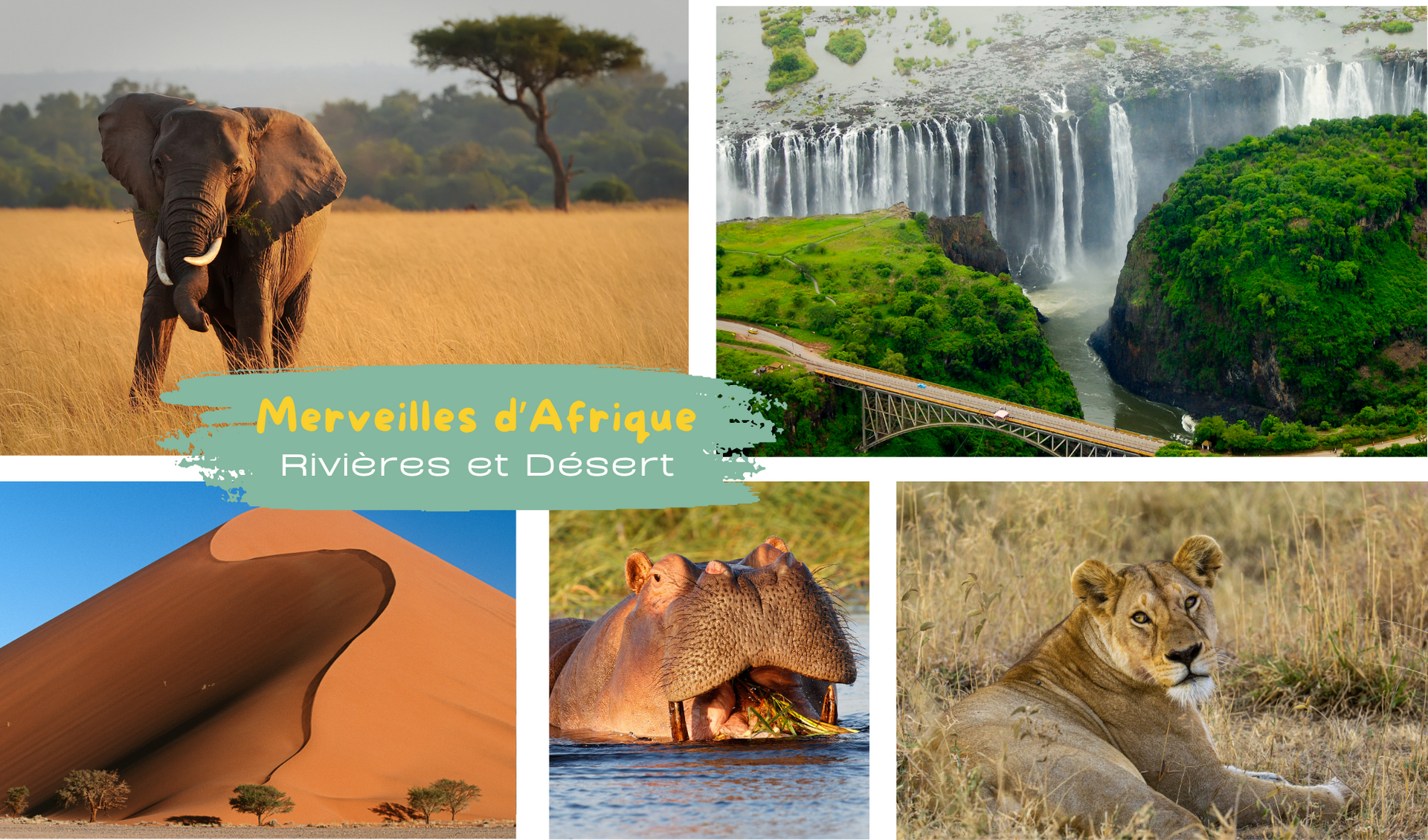
Contrast and nature are the key words of this grand tour in the heart of southern Africa. From the very first stages, you will be struck by the intensity of the colours: the deep blue of the waters and the lush green of the vegetation will envelop you as you pass the majestic Victoria Falls, on the banks of the Zambezi River, as well as along the Chobe River and the Okavango Delta.
Then, gradually, the scenery transforms. The landscapes become more arid, giving way to a palette of warm tones dominated by vibrant yellows and orange hues. You will then discover the raw and silent beauty of Damaraland, before being captivated by the breathtaking immensity of the Namib Desert.
This journey is a true immersion in the elements, a voyage into territories where nature reigns supreme and where each stage reveals a different facet of Southern Africa. Between vibrant waters and endless lands, let yourself be carried away by the magic of these contrasting landscapes, and live an experience as intense as it is unforgettable.
From CHF 5,635.- pp
Itinerary at a glance - 14 days / 13 nights
- 1 night at Victoria Falls (Zimbabwe)
- 1 night in Chobe (Botswana)
- 1 night in Kongola (Namibia)
- 1 night in Divundu
- 1 night in Rundu
- 2 nights in Etosha National Park
- 1 night in Damaraland (Twyfelfontein)
- 2 nights in Swakopmund
- 2 nights in the Namib desert
- 1 night in Windhoek
INCLUDED IN THE PRICE:
- Economy class flights (subject to availability at the time of booking)
- Airport and security taxes
- Transfers to Botswana and Victoria Falls
- Transport in a 4x4 vehicle with a maximum of 10 seats in Namibia
- Accommodation for a total of 13 nights on site in a double/twin room (single supplement: please contact us)
- Breakfasts
- 12 lunches (excluding drinks)
- English-speaking guide for the first 3 days (Victoria Falls and Botswana)
- The services of a French-speaking guide in Namibia
- All excursions and visits mentioned in the program.
NOT INCLUDED IN THE PRICE
- Seat reservations on the plane: fare conditions vary depending on the airline (please contact us for any advance booking requests).
- Lunches on day 2 and day 13
- Drinks
- Tips for guides, drivers and rangers
- Personal expenses
- Activities and excursions not mentioned
- Visa fees
- Travel cancellation/repatriation insurance.
Departures from Geneva or Zurich on May 8* and 18, June 5* and 15, July 20, August 17, September 11* and 21, October 9* and 19, November 6* and 16, 2026.
*Reverse circuit, from Windhoek to Victoria Falls.
Guaranteed from 2 people - Max 8 people per vehicle.
detailed itinerary
Day 1: Geneva - Victoria Falls
Departure from Geneva and overnight stay on board (1 stopover)
Day 2: VICTORIA FALLS
Dinner
Arrive in Zimbabwe and cruise on the Zambezi (English)
English-speaking welcome upon exiting the airport and transfer to your hotel.
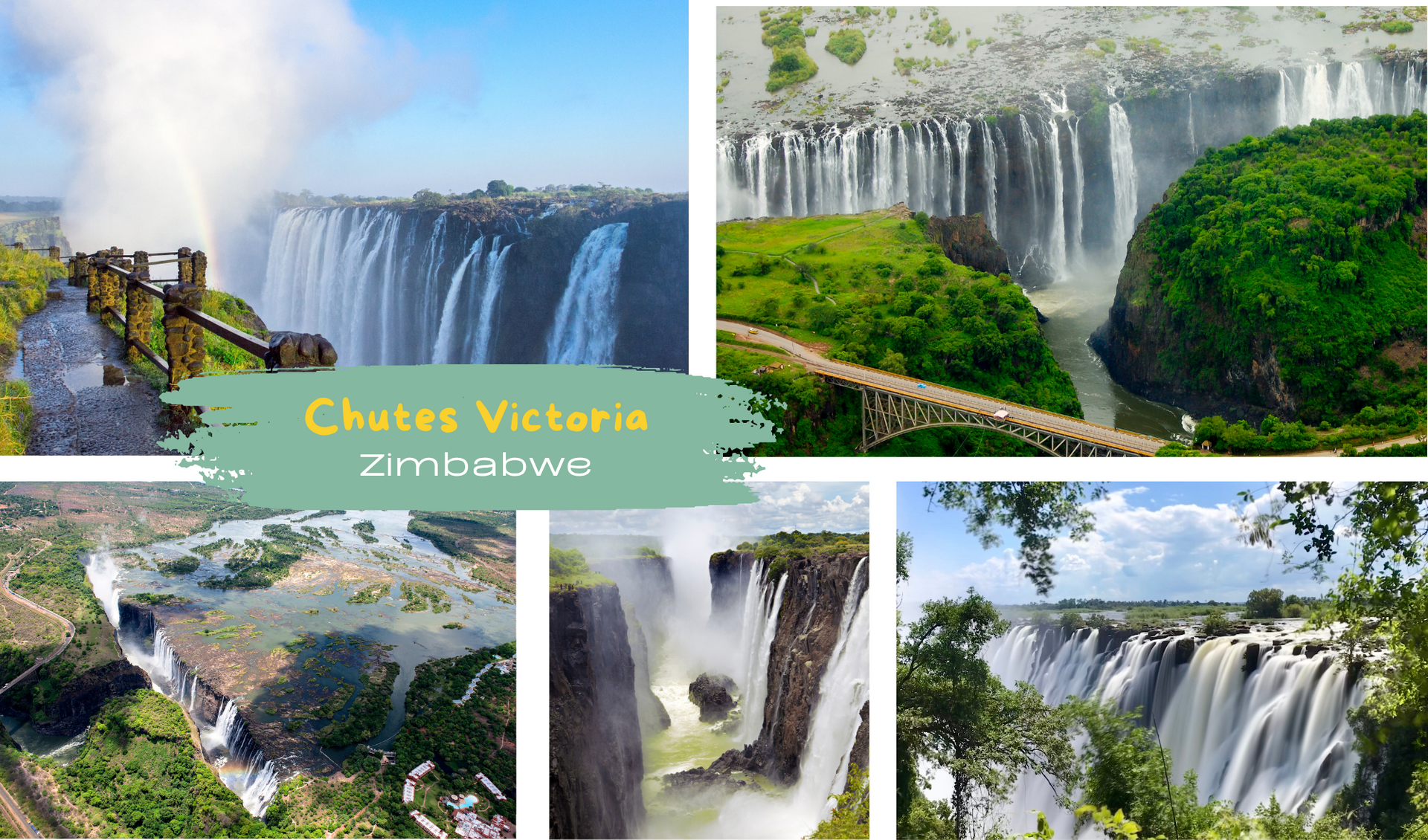
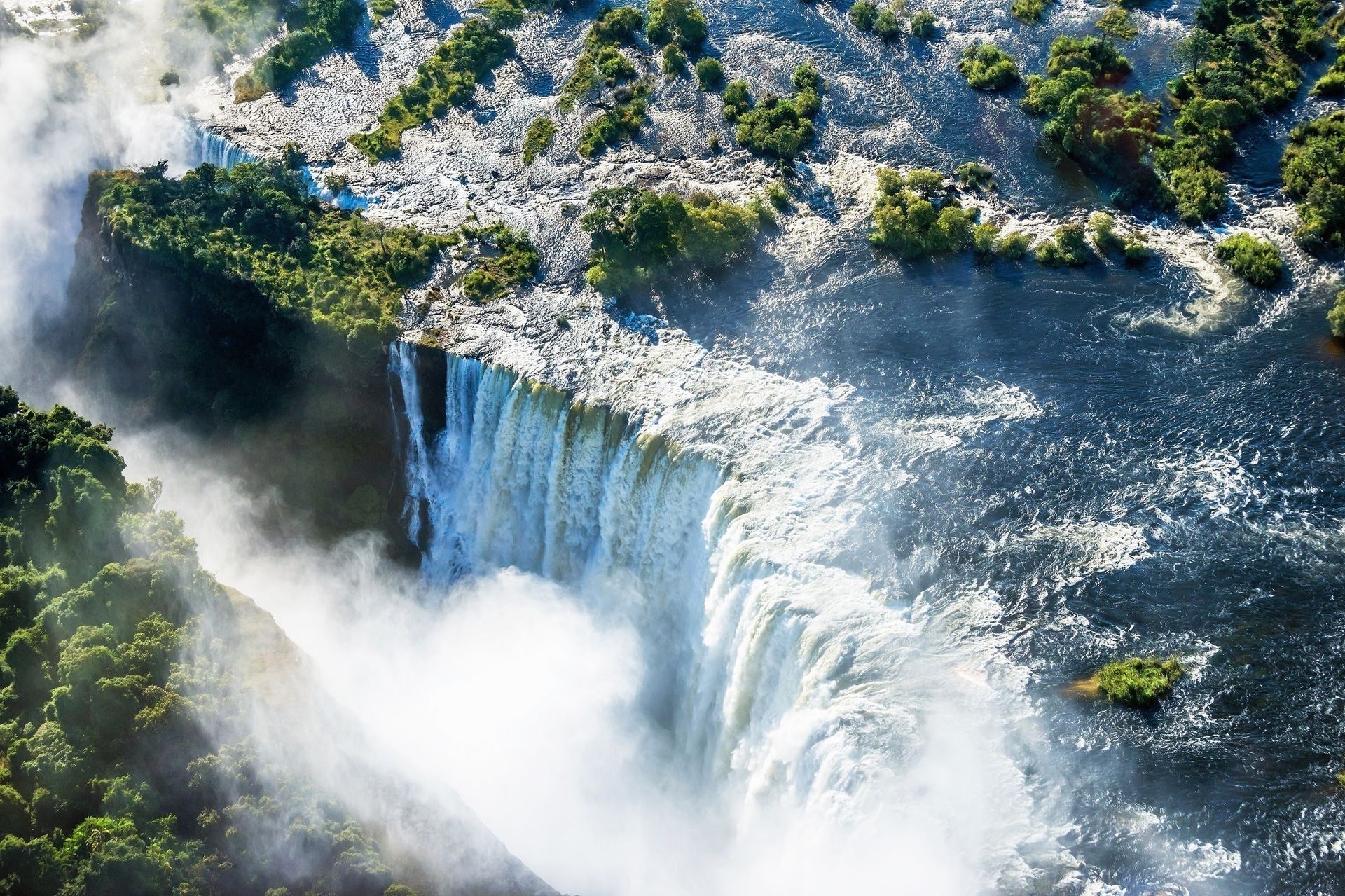
Victoria Falls, located on the border between Zambia and Zimbabwe on the Zambezi River, are among the most spectacular waterfalls in the world due to their width and power. They span approximately 1,700 meters in width and plunge from an average height of 100 meters into a narrow gorge, creating an awe-inspiring curtain of water and a cloud of mist visible for several kilometers, earning them the local nickname "Mosi-oa-Tunya," meaning "the smoke that thunders." Discovered by explorer David Livingstone in 1855, they are now a major tourist attraction and a UNESCO World Heritage Site. Their flow varies seasonally, reaching its peak during the rainy season, which intensifies the visual and auditory spectacle. Beyond their natural beauty, Victoria Falls plays a vital role in the local ecosystem and regional economy, attracting numerous visitors who come to admire this exceptional natural phenomenon and enjoy activities such as rafting and helicopter tours.
In the afternoon, a sunset cruise on the Zambezi River.
Dinner and overnight stay in a 3* hotel.
DAY 3: VICTORIA FALLS - CHOBE PARK
Walking tour of the falls (English-speaking)
In the morning, a walking tour of Victoria Falls, on the Zimbabwean side, with an English-speaking guide.
Here, the water plunges into a long fault in the plateau and escapes through a narrow canyon; the falls can thus be observed head-on, the spectacle is fascinating!
Lunch at a local restaurant or a picnic.
English-speaking transfer to Chobe, Botswana.
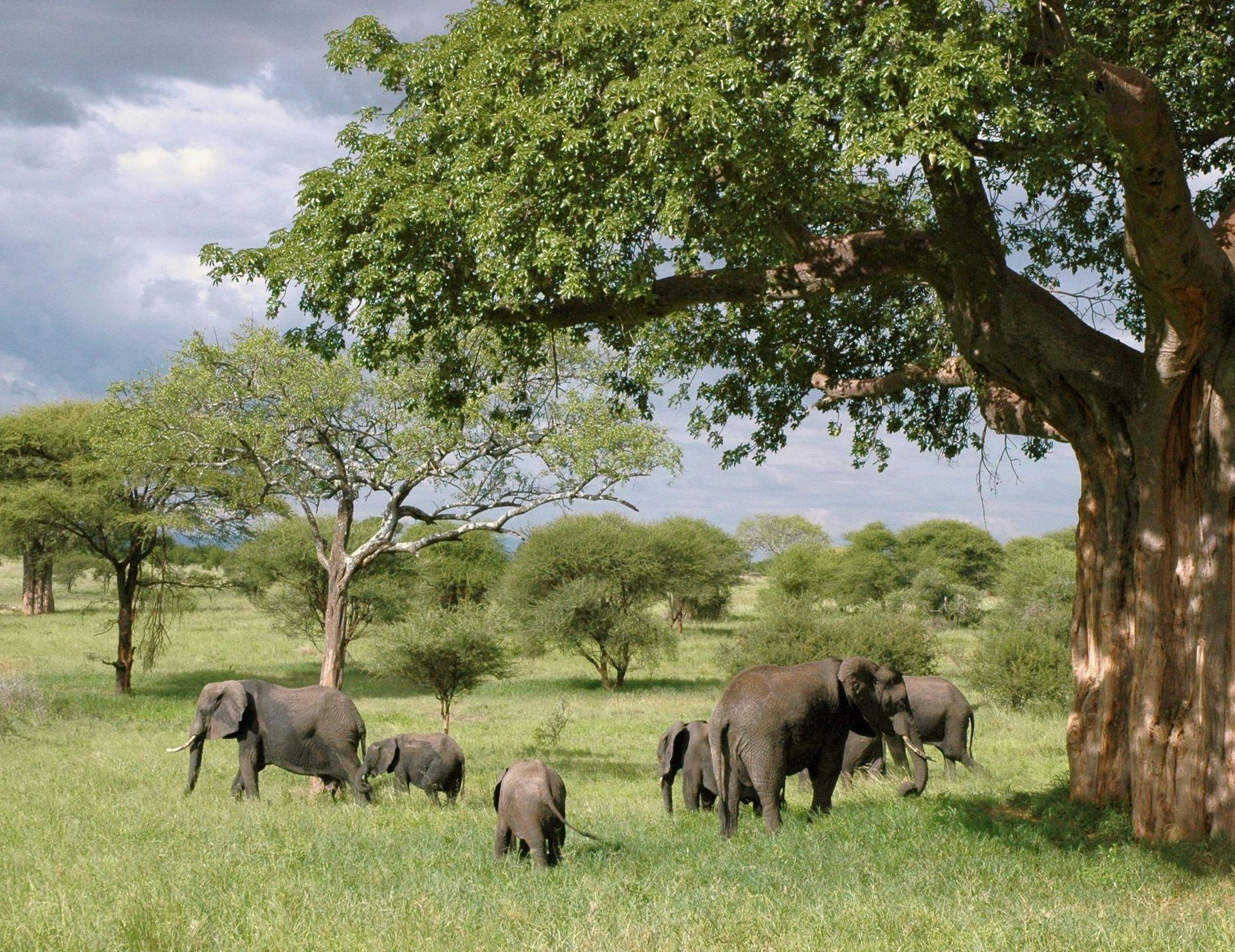
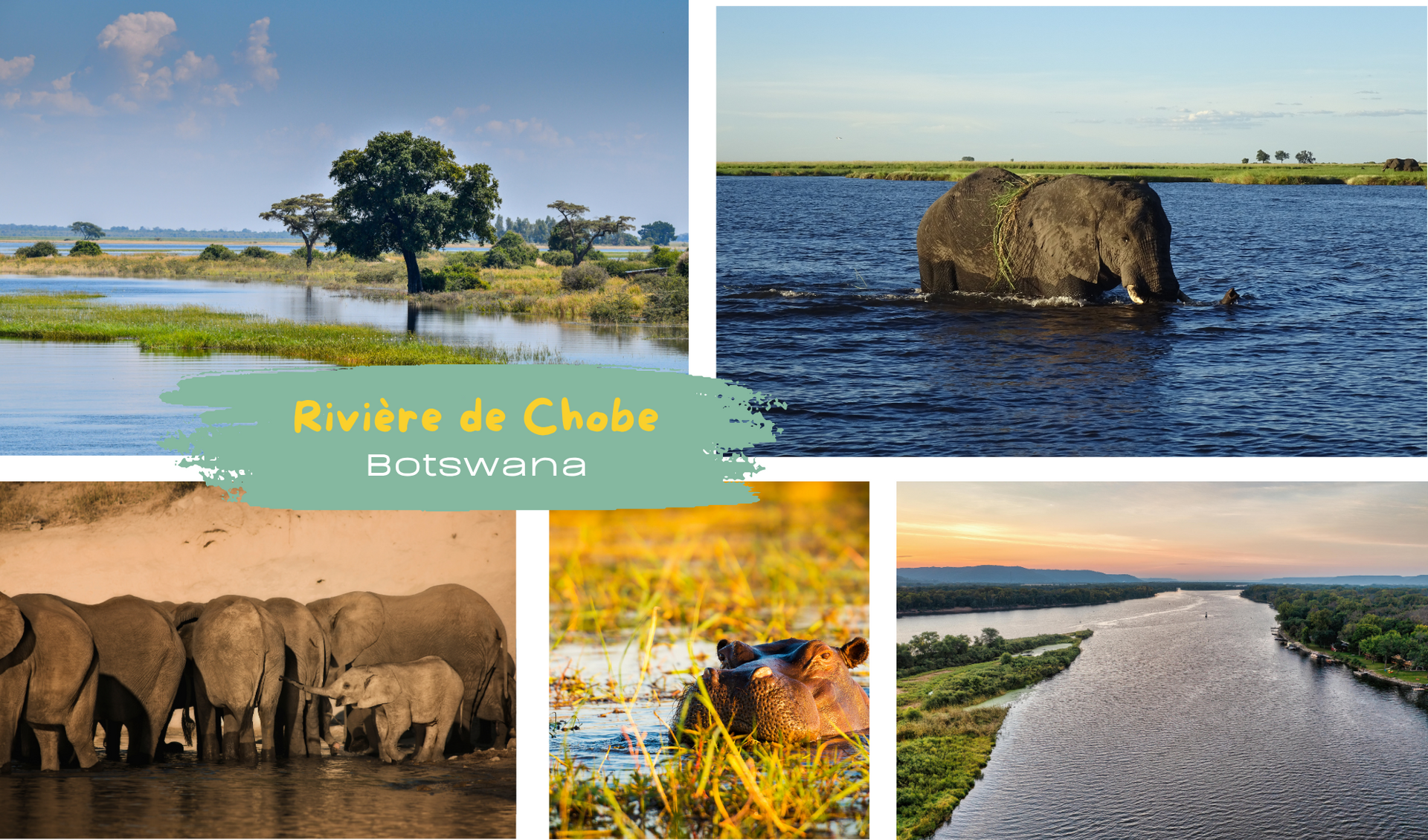
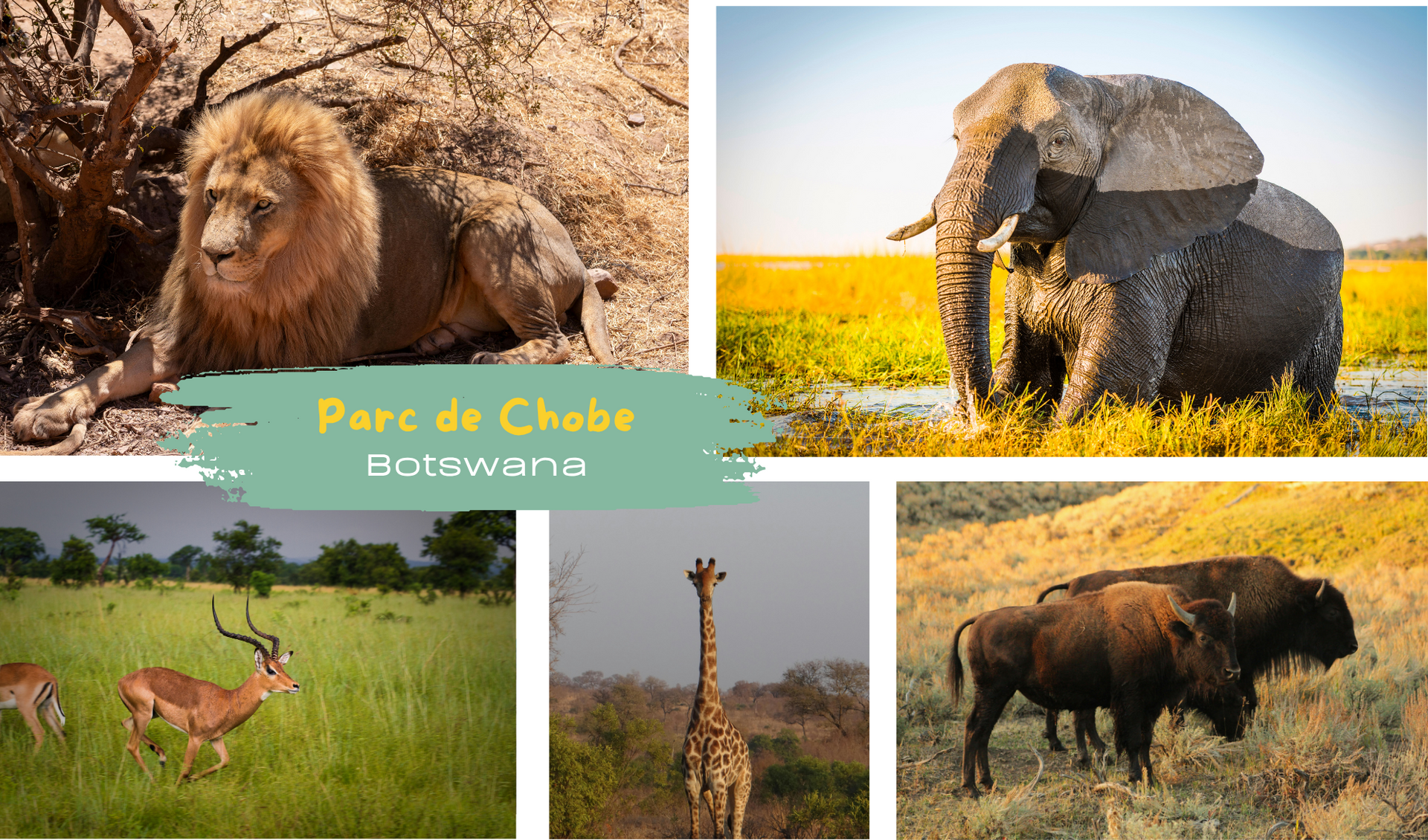
In northeastern Botswana, about 100 kilometers from Victoria Falls and bordered by the river of the same name, Chobe National Park stands out for its immense density of wildlife. It boasts the largest concentration of elephants in Africa! It also hosts large herds of buffalo, giraffes, antelopes, lions, hyenas, not to mention crocodiles and hippos that bask in the river. Verdant hills overlook the vast floodplains, and safaris by 4x4 vehicle and boat are fabulous.
Departure for a water safari by motorboat on the Chobe River, a meeting place for elephants.
Dinner and overnight stay in a 3* lodge.
English-speaking transfer to Chobe, Botswana.
In northeastern Botswana, about 100 kilometers from Victoria Falls and bordered by the river of the same name, Chobe National Park stands out for its immense density of wildlife. It boasts the largest concentration of elephants in Africa! It also hosts large herds of buffalo, giraffes, antelopes, lions, hyenas, not to mention crocodiles and hippos that bask in the river. Verdant hills overlook the vast floodplains, and safaris by 4x4 vehicle and boat are fabulous.
Departure for a water safari by motorboat on the Chobe River, a meeting place for elephants.
Dinner and overnight stay in a 3* lodge.
Day 4: CHOBE PARK - KONGOLA
Morning snack.
Departure for a 4x4 safari in Chobe National Park.
The Caprivi Strip - start of the tour with a French-speaking guide
Departure towards the border with Namibia and picnic lunch.
Meet your French-speaking guide and drive towards the Caprivi Strip.
The Caprivi Strip is so flat that over nearly 500 km the altitude varies by only 39 meters. The traces of parallel dunes, called shonas, common in the Kalahari, are remnants of a time when the climate was much more arid. Many San people live in the Caprivi, but they have abandoned their nomadic lifestyle and traditional hunter-gatherer activities. Most Caprivi residents are settled on the banks of the Okavango or Zambezi rivers.
Kongola and Bwabwata park
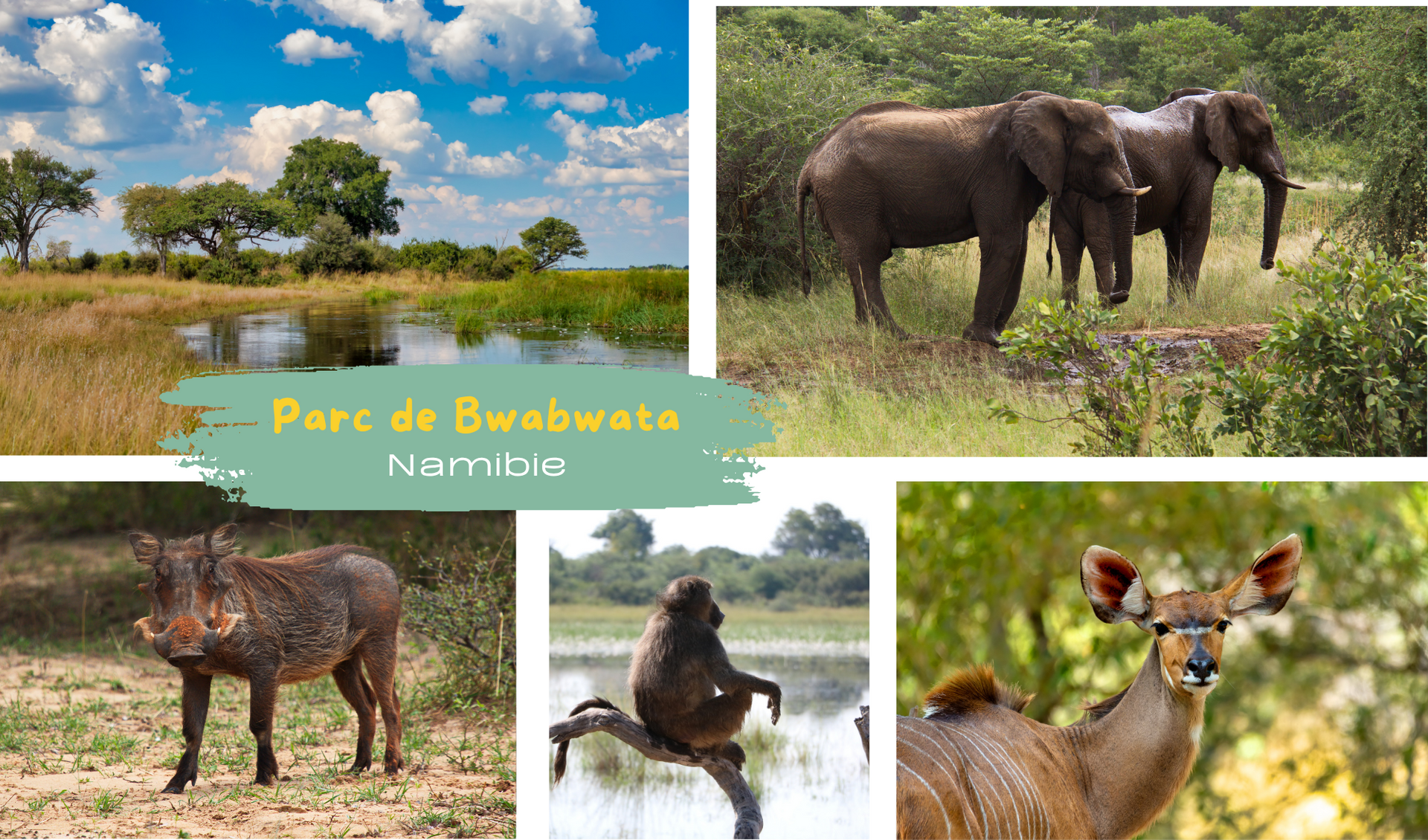
Arrival at the lodge and departure for a first safari in Bwabwata Park.
Kongola, in the Caprivi Strip, is a true ethnic crossroads and a corridor for animal migrations between the parks of Zambia and Botswana (April-May to October-November).
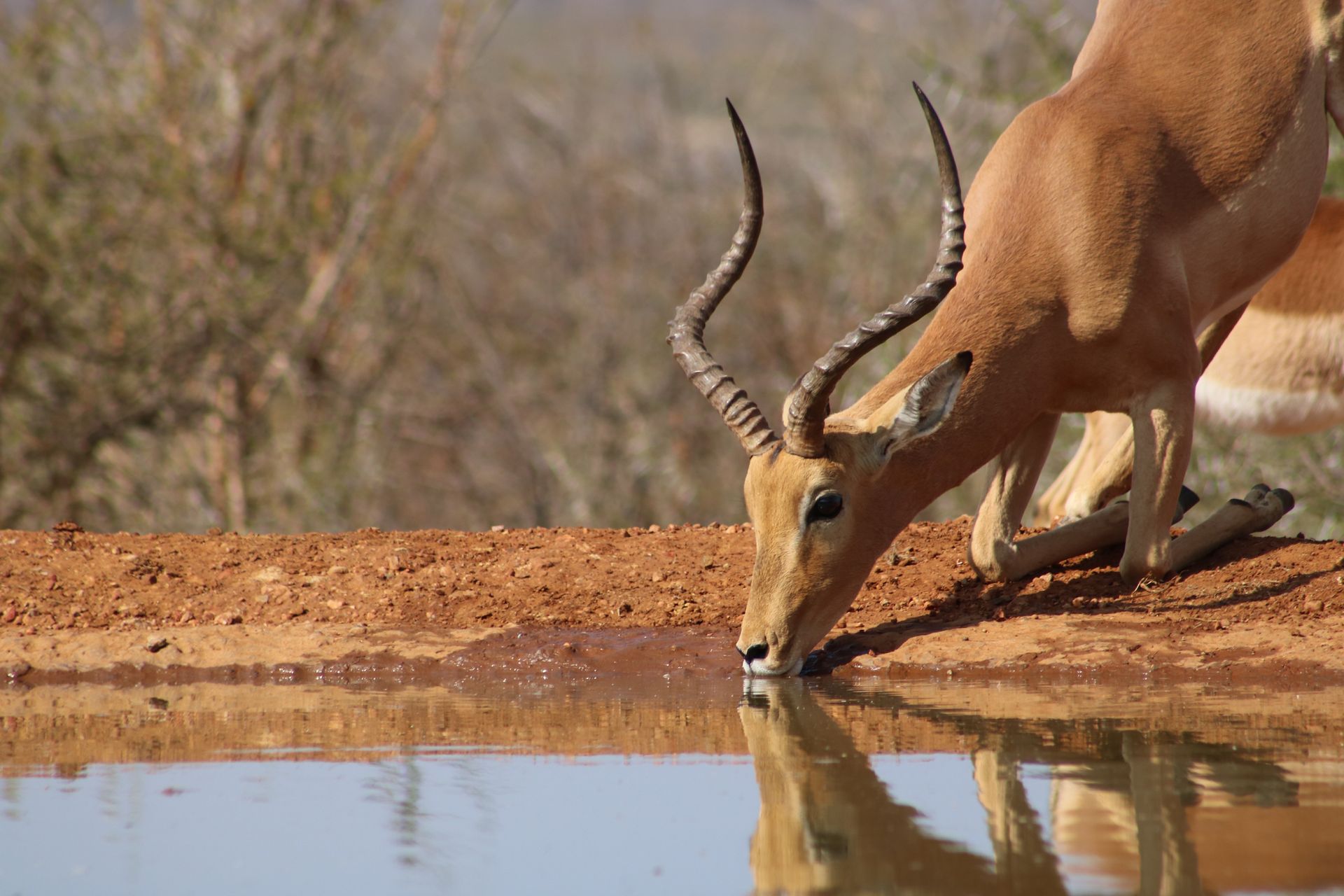
Safari in Bwabwata Park. Here you will have the opportunity to observe elephants, buffalo, crocodiles, hippos and antelopes specific to the delta ecosystem such as roan antelopes and sable antelopes.
Dinner and overnight stay in a 3* lodge.
Day 5: KONGOLA - DIVUNDU
Second safari in Bwabwata Park in the morning and departure for Divundu.
Confusion
Divundu is a small town in northeastern Namibia, on the banks of the Okavango River, near the border with Botswana. This peaceful village is best known as a gateway to exceptional natural sites, including Bwabwata National Park and Popa Falls, which are actually a series of impressive rapids. Divundu offers an authentic and unspoiled setting, far from major tourist areas, where visitors can discover the richness of African wildlife, observe elephants, hippos, and crocodiles, or explore the local culture of the riverside communities. Thanks to its strategic location along the Caprivi Strip, this destination appeals to travelers seeking wilderness, tranquility, and immersive experiences in the heart of Southern Africa.
Sunset cruise on the Okavango River.
Dinner and overnight stay in a 3* lodge.
Day 6: DIVUNDU - RUNDU
This morning, safari in the Mahangu area, located in Bwabwata Park.
Mahangu Zone.
The Mahangu area, located in northeastern Namibia within Bwabwata National Park, is one of the country's most biodiverse regions, largely thanks to the constant flow of the Okavango River. Unlike many other, more arid areas of Namibia, Mahangu is distinguished by its verdant landscapes of floodplains, riparian forests, and savannah, which attract abundant and diverse wildlife. Elephants, buffalo, hippos, crocodiles, as well as numerous antelope and bird species, are easily spotted, making this area a true paradise for safari and birdwatching enthusiasts. Accessible from the Divundu region, Mahangu offers a more intimate and authentic experience than the major African parks, with tracks allowing for self-drive safaris and total immersion in a preserved ecosystem, where the coexistence of wildlife and local communities remains essential.
Lunch then drive to Rundu.
Round
Rundu is a town located in northeastern Namibia, on the banks of the Okavango River, near the border with Angola. The capital of the Kavango East region, it is an important administrative and commercial center, as well as a strategic stopover for travelers heading to the Caprivi Strip or Bwabwata National Park. Less touristy than other destinations in the country, Rundu offers an authentic immersion in local life, with its lively markets, traditional crafts, and peaceful riverside landscapes. The river plays a central role in daily life, both for fishing and agriculture, and also provides opportunities to observe diverse wildlife, including birds and occasionally hippos. Rundu thus appeals to travelers seeking a cultural and natural experience, far from the usual tourist routes, while also serving as a convenient gateway to northern Namibia.
Dinner and overnight stay in a 3* lodge
Day 7: RUNDU - ETOSHA PARK
An early start for a long day's drive towards Etosha National Park. It's an opportunity to admire the landscapes as they gradually change.
Lunch on the way and arrival at your lodge in the late afternoon.
Etosha National Park, located in northern Namibia, is one of Southern Africa's most iconic wildlife reserves, renowned for its vast expanse of 22,000 km² and incredible biodiversity. Its unique landscape is dominated by the Etosha Pan, a vast salt flat that reflects the sky and contrasts with the surrounding grasslands and woodlands, offering spectacular panoramas. The park is home to impressive wildlife, including lions, elephants, black and white rhinos, giraffes, zebras, and numerous antelope species, attracted to the permanent waterholes where visitors can observe them up close. Etosha is also a birdwatcher's paradise, with over 340 recorded bird species. Thanks to its network of roads and developed camps, the park allows for self-guided or guided safaris, offering an immersive experience in a preserved and accessible ecosystem, where encounters with wild nature remain at the heart of the adventure.
Dinner and overnight stay in a 3* lodge.
Day 8: ETOSHA PARK
Full day safari in the park.
Etosha Park
You will see elephants, giraffes, zebras, rhinos, lions and lionesses, ostriches, warthogs, wildebeest, springboks and other antelopes, birds and maybe cheetahs.
Dinner and overnight stay in a 3* camp.
Day 9: ETOSHA PARK - TWYFELFONTEIN
Departure towards the Damaraland region and the Aba-Huab river in search of desert elephants.
Lunch on the way.
Damaraland
Damaraland, located in northwestern Namibia, is a semi-desert region renowned for its spectacular landscapes and rich cultural heritage. Characterized by impressive rock formations, deep canyons, and granite mountains, Damaraland offers a unique setting ideal for exploration and photography. The region is also home to wildlife adapted to arid conditions, including desert elephants, black rhinos, oryx, and springbok, which have developed specific strategies to survive in this harsh environment. Damaraland is also the traditional territory of the Damara people, whose crafts and local traditions add a strong cultural dimension to the visit. Accessible from towns like Kamanjab and Twyfelfontein, this region attracts travelers seeking adventure, spectacular scenery, and authentic experiences in the heart of one of Namibia's wildest and most pristine environments.
Dinner and overnight stay in a 3* camp.
Day 10: TWYFELFONTEIN - SWAKOPMUND
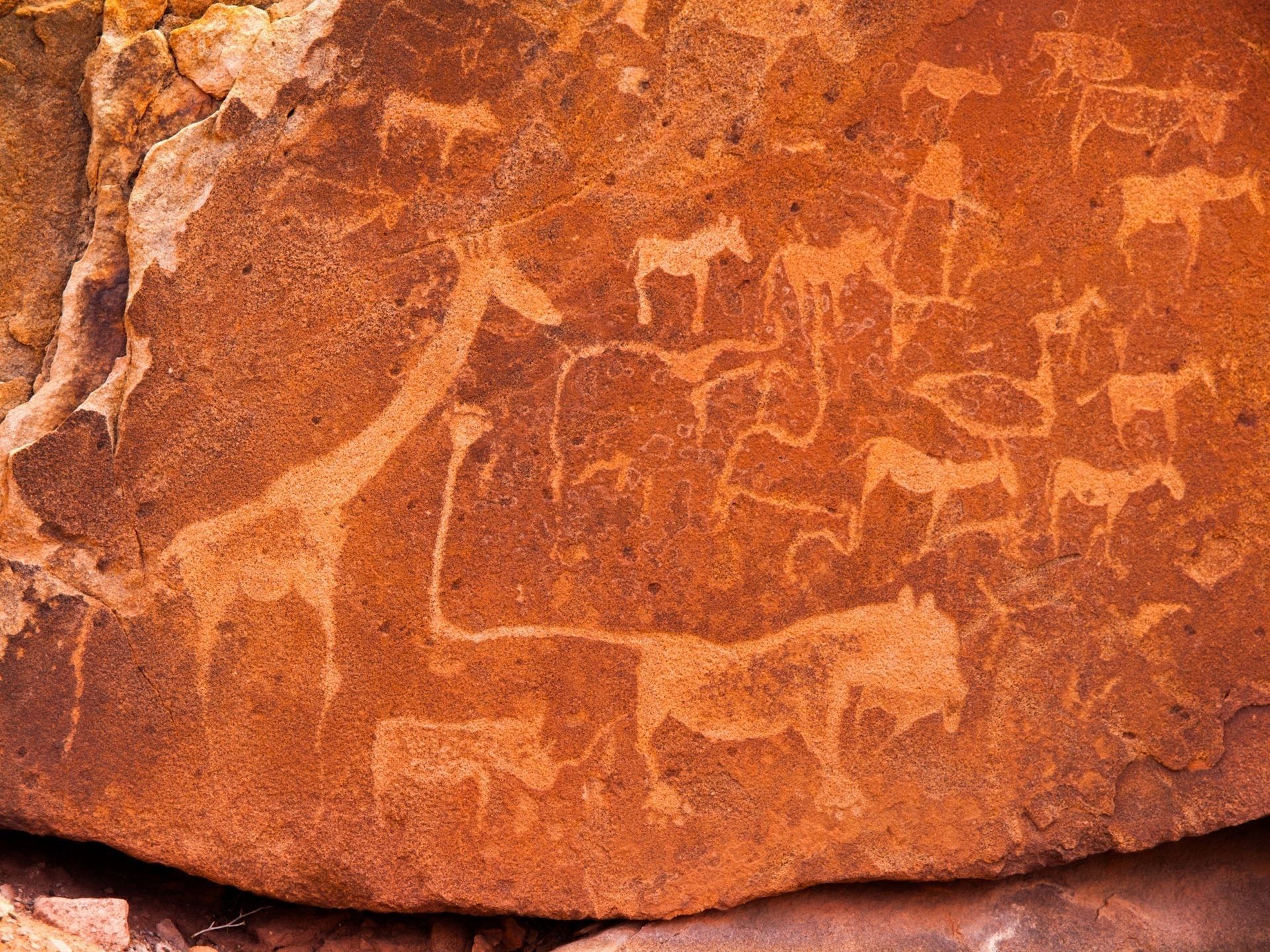
This morning, visit to the Twyfelfontein site, the burnt mountain and the basalt columns.
Doubtfulfontein
Located in the Kunene region of Namibia, Twyfelfontein is an exceptional archaeological site renowned for its thousands of rock carvings and petroglyphs dating back millennia, created by the San people. These carvings depict local animals such as elephants, giraffes, and rhinoceroses, as well as hunting scenes and symbolic motifs, offering a unique glimpse into the daily life and spiritual beliefs of prehistoric communities. In addition to its cultural significance, Twyfelfontein features remarkable geological formations, such as the dolerite columns known as the Organ Pipes, and was designated a UNESCO World Heritage Site in 2007. The site offers guided trails that allow visitors to admire the carvings and gain a deeper understanding of their historical and cultural significance.
Swakopmund
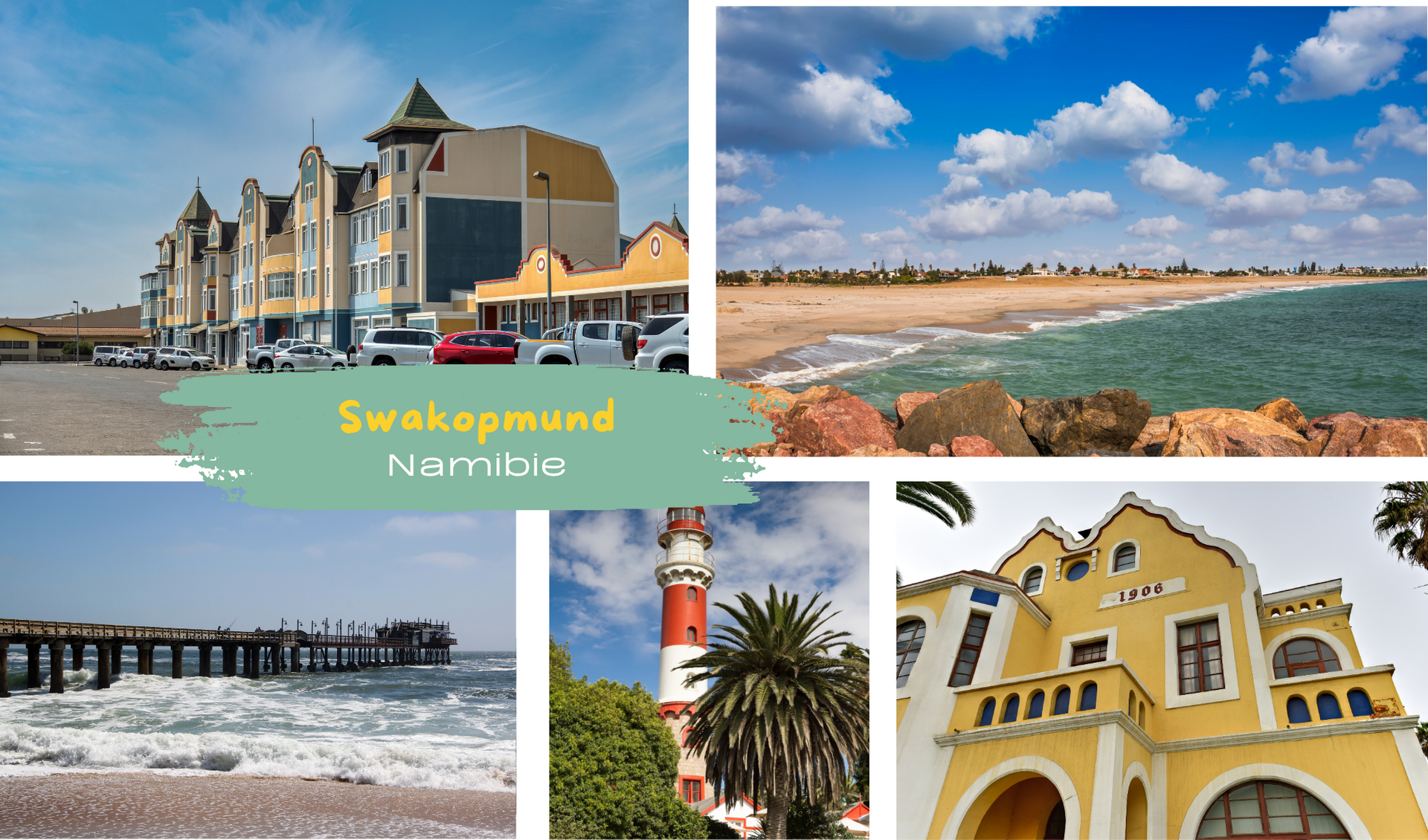
Swakopmund is a coastal town on Namibia's Atlantic Ocean, known for its German colonial charm, historic architecture, and popularity as a seaside resort. Founded in the late 19th century, it retains typical German-style buildings, palm-lined streets, and a picturesque atmosphere that contrasts with the nearby Namib Desert. Swakopmund is also a hub for tourism and adventure activities, offering desert excursions, sandboarding, quad biking, and tours to observe local wildlife, including seals and dolphins along the ocean's edge. Its harbor, museums, and craft markets make it a place where history, culture, and nature converge, attracting both heritage enthusiasts and thrill-seekers.
Dinner and overnight stay in a 3* hotel
Day 11: SWAKOPMUND - WALVIS - SWAKOPMUND
This morning, transfer to the port of Walvis Bay.
Boat trip
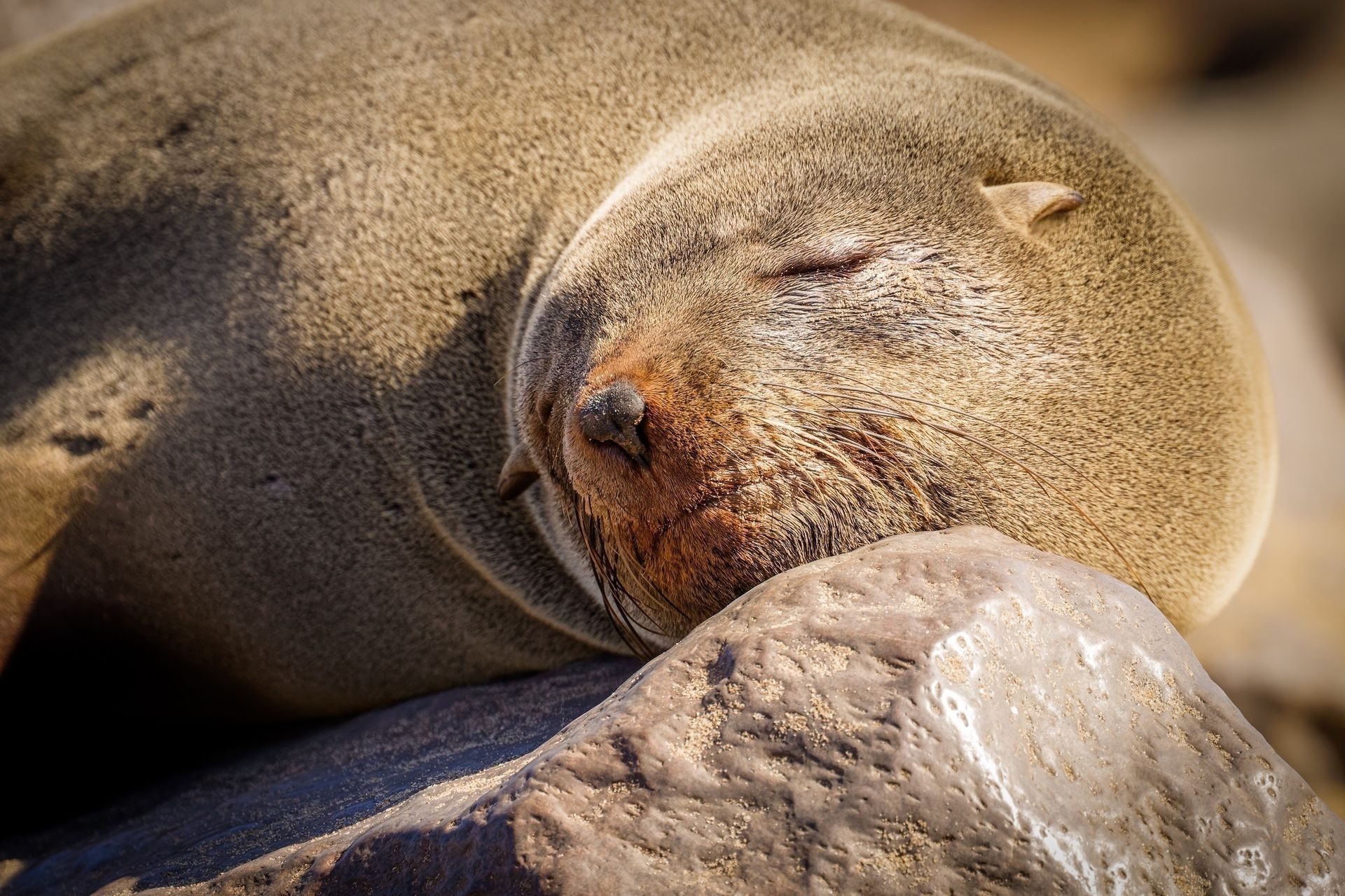
Discover pink flamingos, pelicans, pods of dolphins and colonies of sea lions that charm you with their antics.
A tasty snack is served on board before returning to port at midday.
Free afternoon or optional excursion to Sandwich Harbour dunes for example, payable locally at an additional cost.
Dinner and overnight stay at the hotel.
Note: Bring warm clothing.
Day 12: SWAKOPMUND - NAMIB DESERT
Departure towards the Namib Desert via the Kuiseb River canyon, which separates the immense rocky plains of the north and the sea of sand of the desert to the south.
Lunch on the way.
The Namib Desert
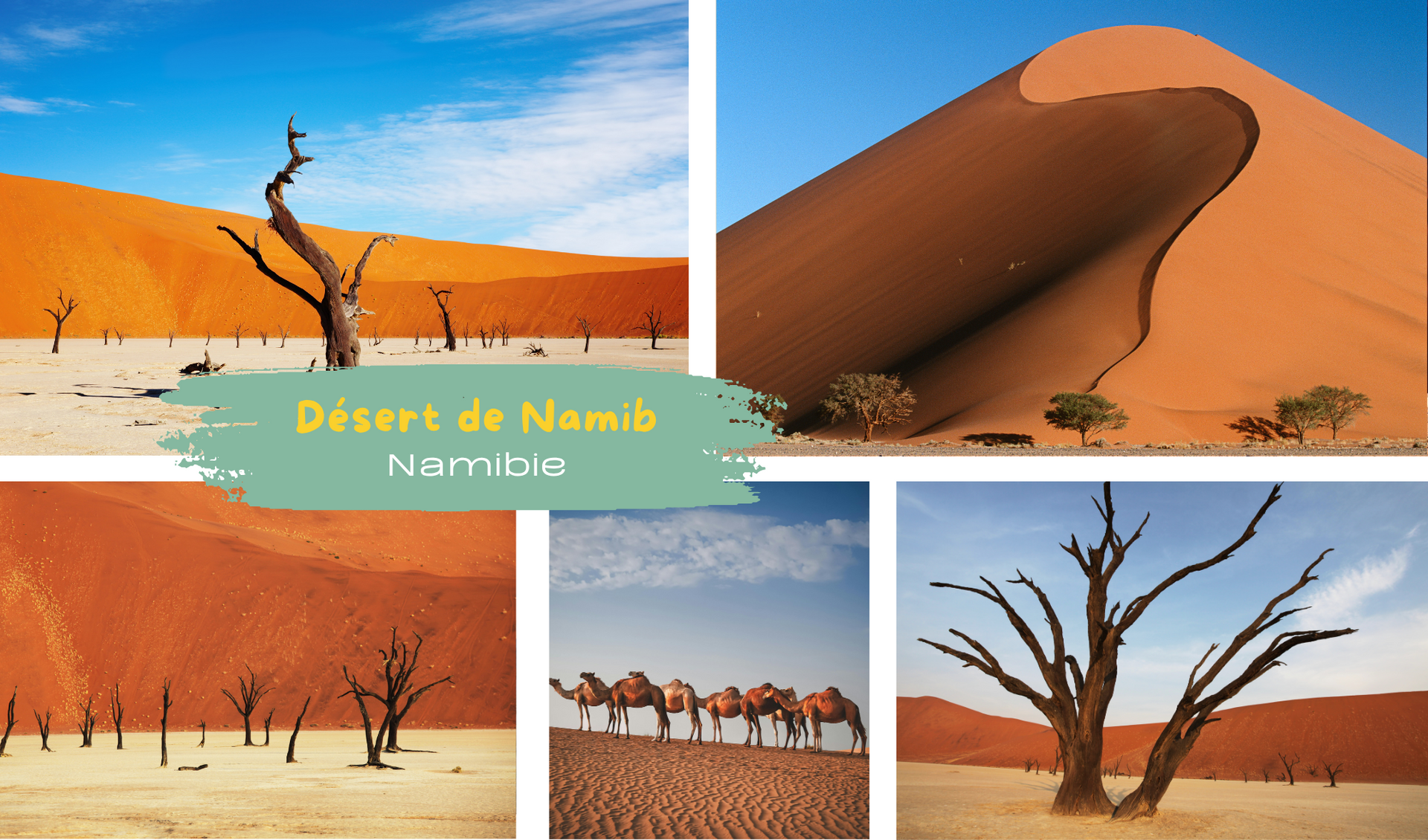
One of the oldest deserts in the world, stretching along Namibia's Atlantic coast for approximately 2,000 kilometers, the Namib Desert is characterized by its vast red sand dunes, arid plains, and dramatic rock formations. It is home to flora and fauna adapted to extreme conditions, including oryx, springbok, scorpions, and endemic plants such as the Welwitschia. This unique landscape, sometimes called a "living desert," fascinates with its striking contrasts between sand, sea, and mountains, and attracts tourists, scientists, and photographers with its spectacular panoramas and iconic sites like Sossusvlei and Sesriem. The Namib Desert is also a living testament to the region's geological and ecological history, combining natural beauty with ancient mystery.
Dinner and overnight stay in a 3* lodge
Day 13: Namib Desert
Departure before dawn towards the highest dunes in the world: Dead Vlei and Sossusvlei are breathtakingly beautiful.
Sossusvlei
The dunes of Sossusvlei are the tallest dunes in the world, reaching 300 meters in height, and lie at the heart of the oldest desert in the world. The colors are incomparable, and you will experience magical and unique moments here.
Lunch.
In the afternoon, we explored the Sesriem Canyon, carved by rivers that have now disappeared.
Dinner and overnight stay at the lodge
Day 14: NAMIB DESERT - WINDHOEK
Visit to a wine estate and tasting of Namibian wines.
Namibian wines
Namibian vineyards are rather unique. The sandy and stony soils, combined with significant temperature variations, produce grapes concentrated in aromas. You'll find mainly Chenin Blanc, Colombard, and a few red grape varieties adapted to the heat. Production is modest, but modern methods and South African expertise now allow us to enjoy quality wines that blend the power of the daytime sun with the coolness of the night.
Lunch and drive to Windhoek.
Dinner and overnight stay in a 3* hotel.
Jour 15 : WINDHOEK - DEPART
Free time and return flights.
Windhoek
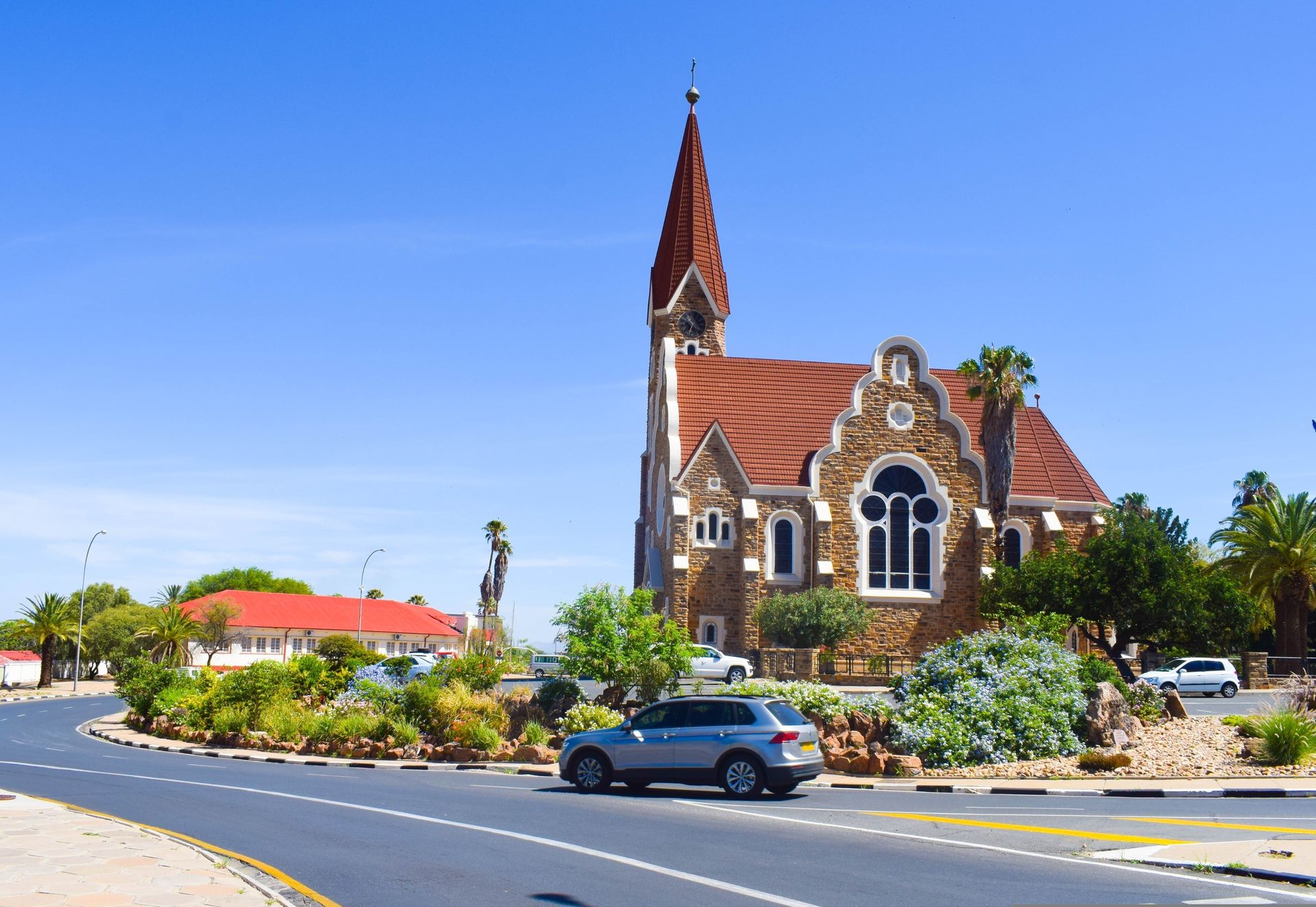
Windhoek is a medium-sized capital city of approximately 400,000 inhabitants, situated at an altitude of 1,700 meters in the Khomas Hochland hills. It surprises with its tranquility, impeccable layout, modern infrastructure, flower-filled gardens, and Germanic architecture inherited from the colonial period. The Black population is concentrated in the north of the city, a reminder that Namibia is a former South African colony long subjected to the apartheid regime.
Lunch on your own.
Transfer to the airport according to your flight schedule.
Return flights (1 stopover). Overnight flight.
Day 16: GENEVA
Return flights.
Arrival in Switzerland.
More information
& reservation