Laotian Magic
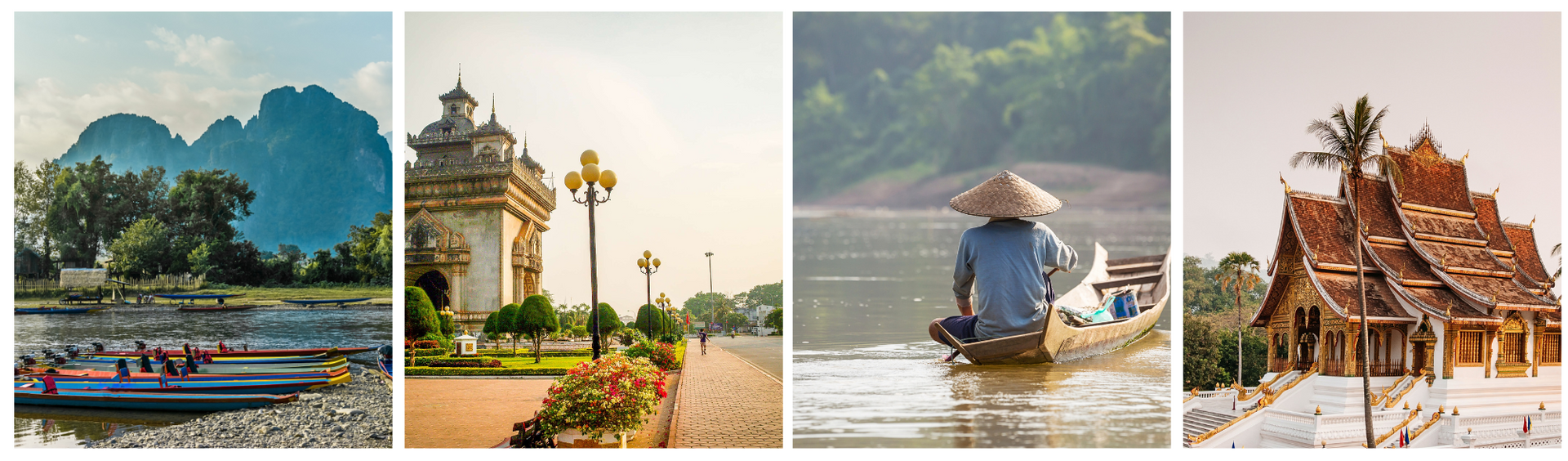
Welcome to Laos, in the heart of an Asia that has remained unspoilt.
This journey invites you to discover an authentic country, where age-old traditions, wild landscapes and cultural heritage shape every step of the way. Starting in Chiang Rai, in northern Thailand, the route gradually leads into Laos, through lush mountains, traditional villages, Buddhist temples and peaceful banks of the Mekong.
Along the way, cruise the legendary Mekong to Pakbeng before continuing to Luang Prabang, a true cultural gem. Remarkable temples, the morning alms-giving ceremony, the turquoise waters of Kuang Si Falls and encounters with local communities offer a varied and comprehensive introduction to the region.
An off-the-beaten-track itinerary, designed to give you time to discover Laos in all its authenticity, taking in culture, nature, traditions and a gentle pace of life.

DETAILED ITINERARY
Days 1 TO 2: GENEVA - bangkok - chiang rai
Arrive at the airport and meet your French-speaking guide.
In the afternoon, visit Wat Rong Khun, Chiang Rai’s famous White Temple. Conceived by Thai artist Chalermchai Kositpipat, this monument stands out for its spectacular architecture and distinctive style, blending Buddhist symbolism, exquisite artistic details and contemporary influences.
Check in at the hotel and enjoy some free time to relax.

Day 3: CHIANG RAI
Early in the morning, depart by private vehicle for the border between Thailand and Laos. After completing the border formalities, meet your Lao guide and continue to the Huay Xai pier.
You’ll then board a traditional boat to cruise along the Mekong to Pak Beng. Lunch is served on board as lush landscapes and riverside villages drift by. Located between Huay Xai and Luang Prabang, Pak Beng is an essential stop on Mekong cruises.
On arrival, check in and take a walk through the village and its surroundings. At the end of the day, enjoy the peaceful setting and the last light as you admire the sunset over the Mekong.
Day 4: pakbeng
This day is dedicated to learning about elephants and their protection in Laos. A presentation will help you better understand these iconic animals, their place in the local ecosystem and the challenges involved in their conservation.
You then head into the heart of the forest to meet them, with the chance to walk alongside them and observe them in their natural environment. Depending on how the day unfolds, you may also see them bathing in the waters of the Mekong or enjoying a snack. Lunch at the park restaurant.
In the afternoon, help prepare nutritious supplements for the elephants, before exploring the region’s traditional crafts. A number of workshops introduce you to bamboo craft, loom weaving and blacksmithing techniques.
The day continues with the chance to observe the elephants’ care and daily routine, before ending on the banks of the Mekong, where you can watch them enjoy a swim and move freely in the water.

Day 5: NAMKAT YORLA PA
In the morning, set off for Oudomxay and NamKat Yorla Pa Nature Park, a verdant haven in the heart of northern Laos. On arrival, enjoy the tranquillity of the surroundings and the peaceful atmosphere of this unspoilt natural setting.
The adventure continues deep in the jungle, along narrow, winding paths through dense vegetation. Follow small trails and cross several suspension bridges before reaching a waterfall tucked away in the forest. Take some time to relax there, with the option of cooling off in the water.

Day 6: NAMKA YORLA PA
Today takes you to discover the Ikhos and H’mong communities, along a mountain road that climbs to nearly 1,000 metres above sea level. Along the way, enjoy stunning views of the region’s rugged terrain and wild landscapes.
The first stop takes you to a particularly remote Ikhos village, where you’ll discover the daily life and traditions of this community, whose origins can be traced to the regions of Tibet and Yunnan in China. A picnic lunch is planned amid the mountain scenery. Those who wish can then hike to an old, now-uninhabited H’mong village, which offers remarkable 360° views of the surrounding area.
Your exploration continues with a visit to an inhabited H’mong village. You’ll gain a better understanding of the way of life of this mountain people of Asia, their traditions and the important role livestock plays in everyday life, particularly buffalo and pigs.

Day 7: NAMKA YORLA PA
Depart for Nong Khiaw, with the option to stop at villages along the way. Lunch will be served en route.
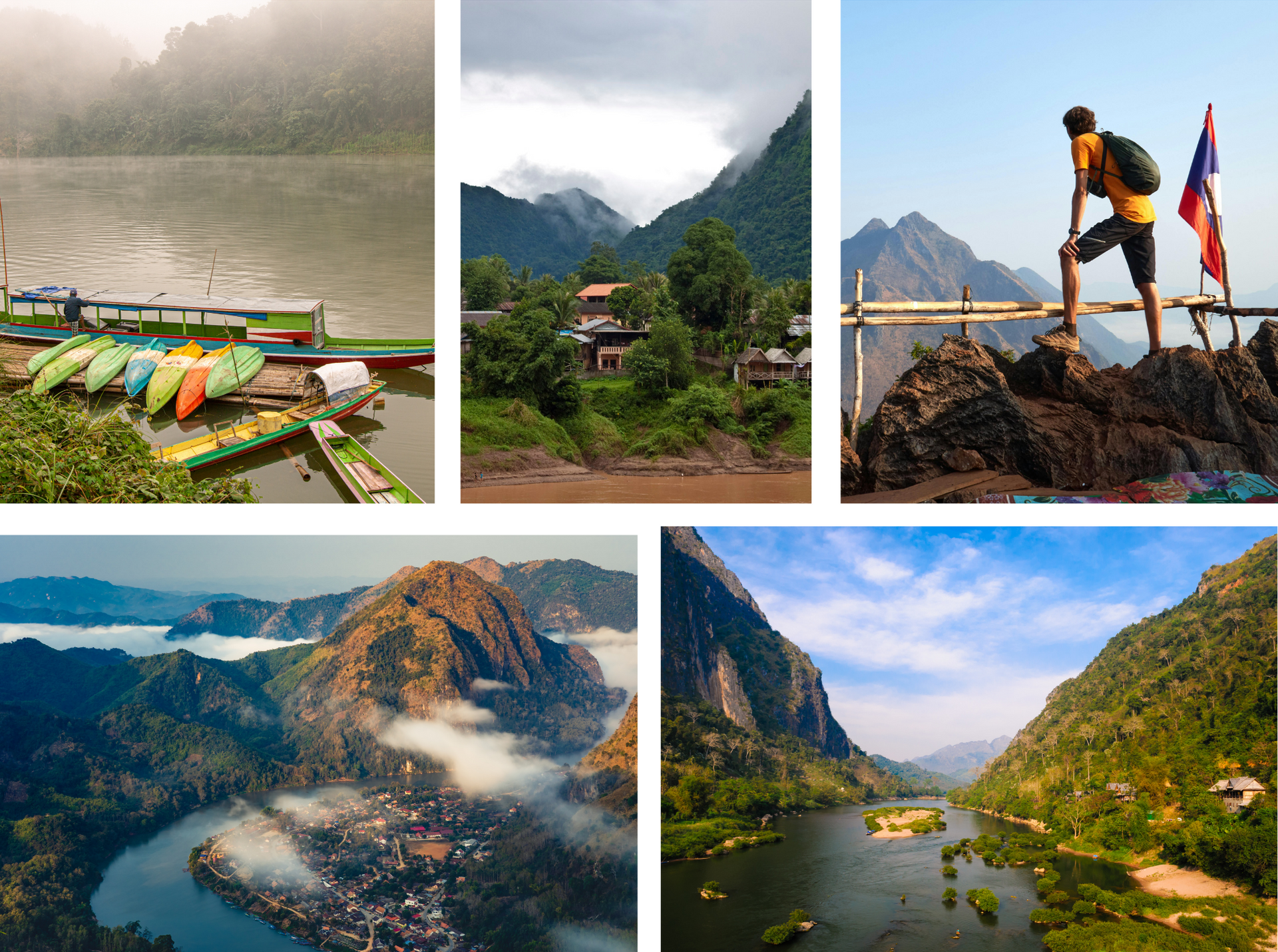
Situated on the banks of the Nam Ou River, Nong Khiaw enjoys a remarkable natural setting, surrounded by the imposing karst formations characteristic of northern Laos.
In the afternoon, set off on a hike through lush tropical vegetation. A trail gradually climbs the heights overlooking the city, with several rest areas along the way.
At the summit, your efforts are rewarded with a superb panorama of Nong Khiaw, the valley and the Nam Ou River, winding between lush green hills. After taking some time to admire the spectacular scenery, walk back down to town.
Day 8: NONG KHIAW
In the morning, depart for Luang Prabang for a journey of approximately 3.5 hours. On arrival in the Pak Ou region, you make your way to a local home, where a traditional Lao lunch awaits, prepared with fresh local produce.
You’ll then discover the art of arranging flowers for offerings to monks. This activity introduces you to the techniques used and the symbolism behind this tradition, which is deeply rooted in Buddhist culture.
Your exploration continues with a visit to a temple, where you will have the opportunity to receive a blessing from a monk, before walking through the village and observing the daily lives of its residents.
To reach the famous Pak Ou Caves, you have two options: a hike of around 30 minutes through the forest, taking a more secluded route to the site, or a short trip by local boat. Inside the two natural caves, you’ll discover thousands of Buddha images, placed there over the centuries as a testament to the spiritual significance of this site.
At the end of the day, board a local boat to travel along the Mekong to Luang Prabang. Enjoy the cruise and the passing scenery, with the last light of day and the sunset over the river.
Day 9: LUANG PRABANG
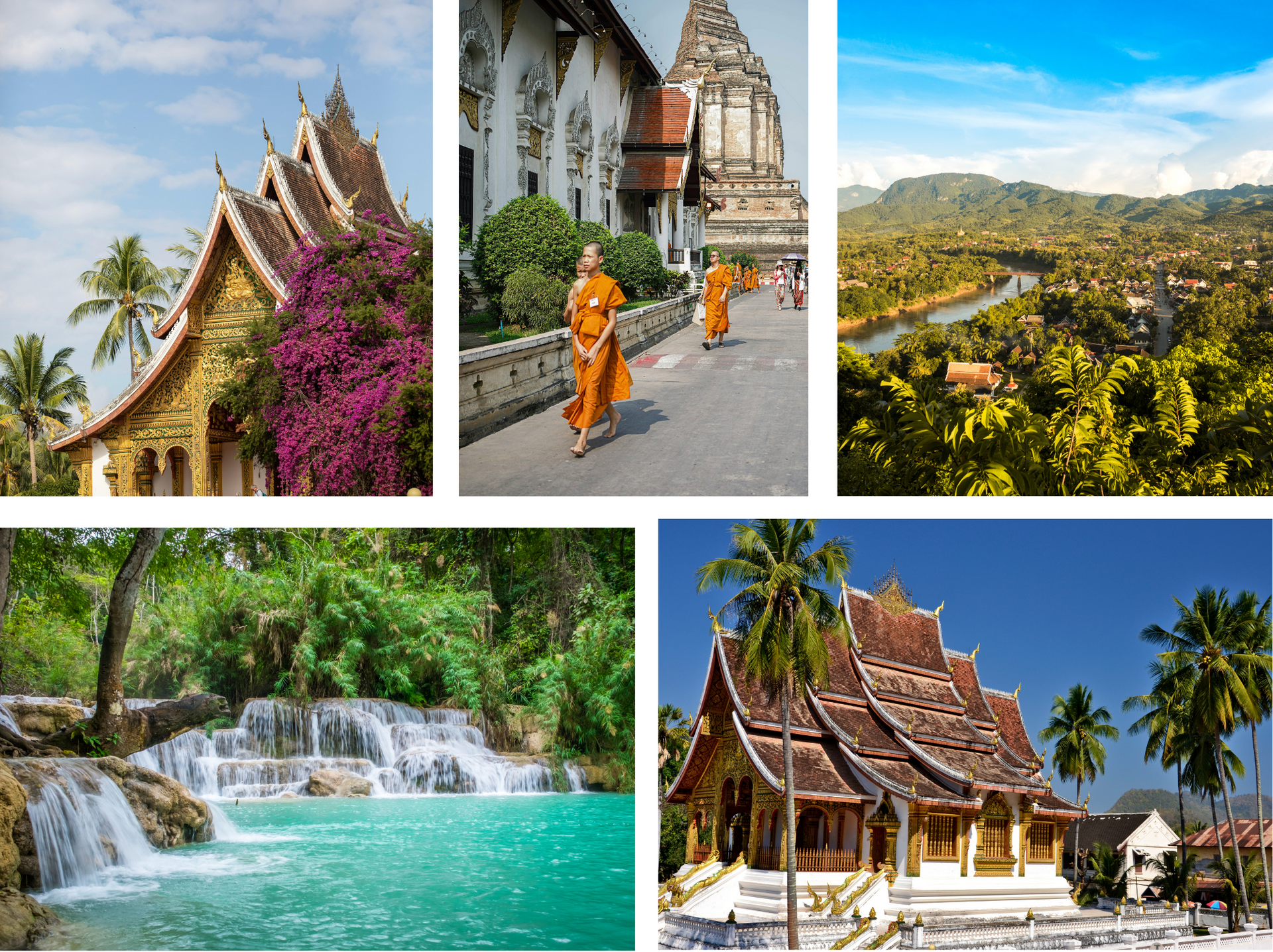
The day begins at first light in a village on the banks of the Mekong, where you’ll witness Tak Bat, one of Laos’s most iconic Buddhist rituals. Near the temple, monks walk silently through the streets as local residents offer them food. You’ll have the opportunity to take part in this tradition or simply observe, while respecting the spiritual and intimate nature of the ceremony.
You’ll continue with a stroll through the village and its local market, which is especially lively in the morning. It’s a chance to discover regional produce and, if you wish, sample some Lao specialities. You can also buy food to offer to the monks before heading to the nearby temple to make an offering and receive a blessing.
The morning ends on a pleasant note at a café by the river, where you can enjoy the peaceful surroundings before returning to your hotel for breakfast.
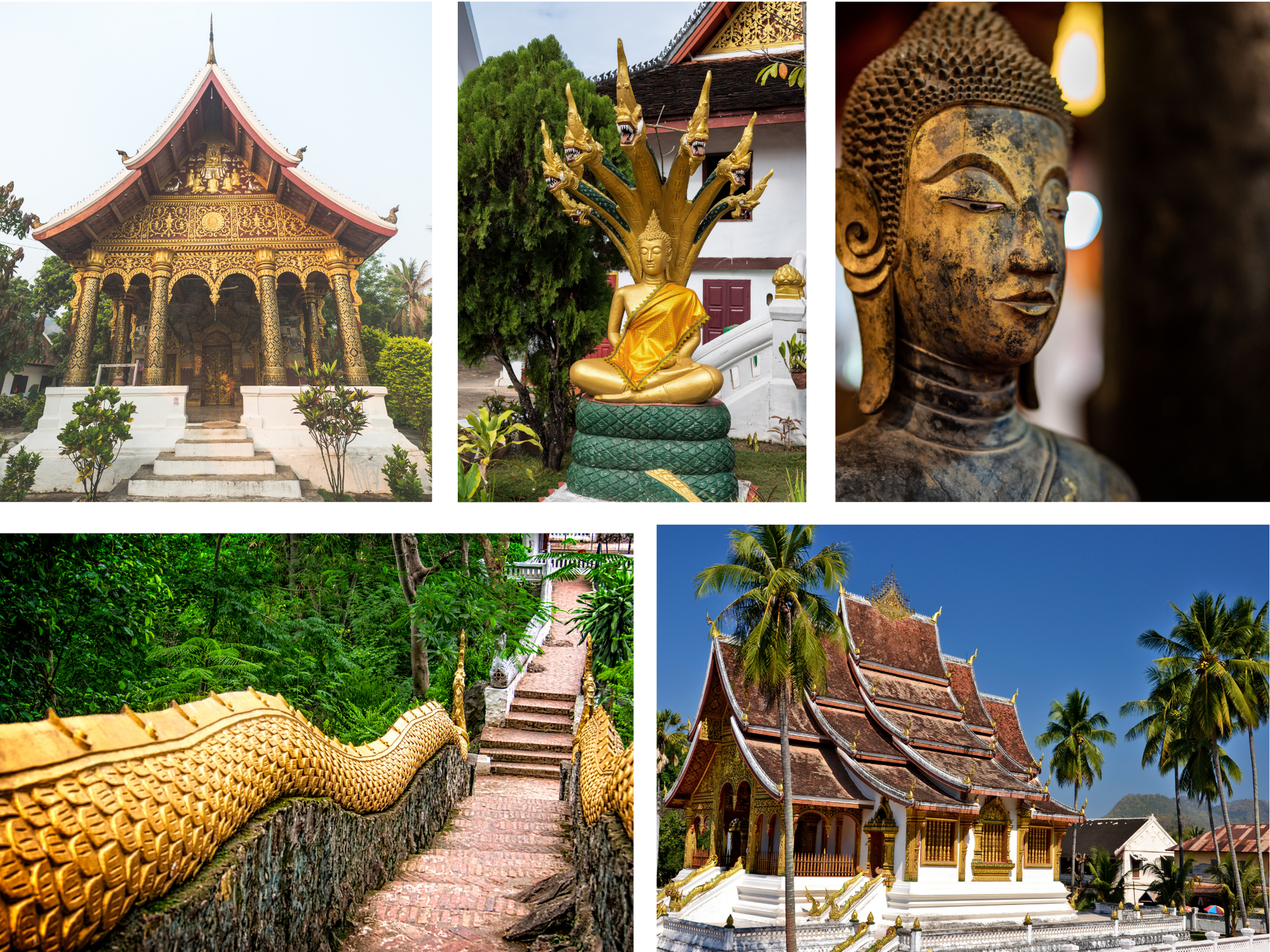
In the afternoon, discover Luang Prabang and its heritage. Nestled between the Mekong and the Nam Khan River and surrounded by mountains, the former royal capital has a unique character shaped by its history, architecture and Buddhist traditions. Explore its main cultural and religious sites and discover the history and rich heritage of this iconic Laotian city.
To make the most of your visit to this picturesque city, a guide will share insights into its history, architecture and culture.
- Climb the 328 steps to the top of Mount Phousi for breathtaking panoramic views of Luang Prabang and the surrounding area.
- Wat Mai, a highly revered sanctuary with a magnificent roof, was built in the late 18th century.
- The Royal Palace, now home to the National Museum, houses a vast collection of precious objects that once belonged to the royal family. It also displays a large number of statuettes discovered in temples throughout the region. Here, you can admire the Phrabang Buddha, considered the most sacred artefact in Laos and the source of the city’s name.
- Wat Xieng Thong, the temple of the royal city, is a complex of temples and sacred shrines showcasing some of the finest traditional Lao art. It is undoubtedly the most beautiful site in Luang Prabang.
- Wat Visoun, the city’s oldest temple, stands out from the others thanks to That Makmo, a stone stupa shaped like a lotus flower.
In the evening, set off on a guided food tour to discover the flavours of Luang Prabang. As you explore the streets and food stalls, you’ll have the chance to sample several iconic Lao dishes.
The tasting begins with a few street-food favourites: Khaojee Lao, made with sticky rice and egg grilled over a barbecue, Ping Khai, grilled egg, and Ping Kwai, banana cooked over a barbecue.
You then head to the night market, where you can enjoy one of the traditional Lao noodle soups, such as Khao Soi or Khao Piak. Continue your culinary discovery with a selection of specialities, including Nem Khao, Lao omelette and the famous Luang Prabang sausage.
To end on a sweet note, enjoy a fried coconut crepe and Khao Nom Kok, soft coconut cakes cooked in a traditional mould. A refreshing drink rounds off this delightful introduction to local cuisine.
Day 10: LUANG PRABANG
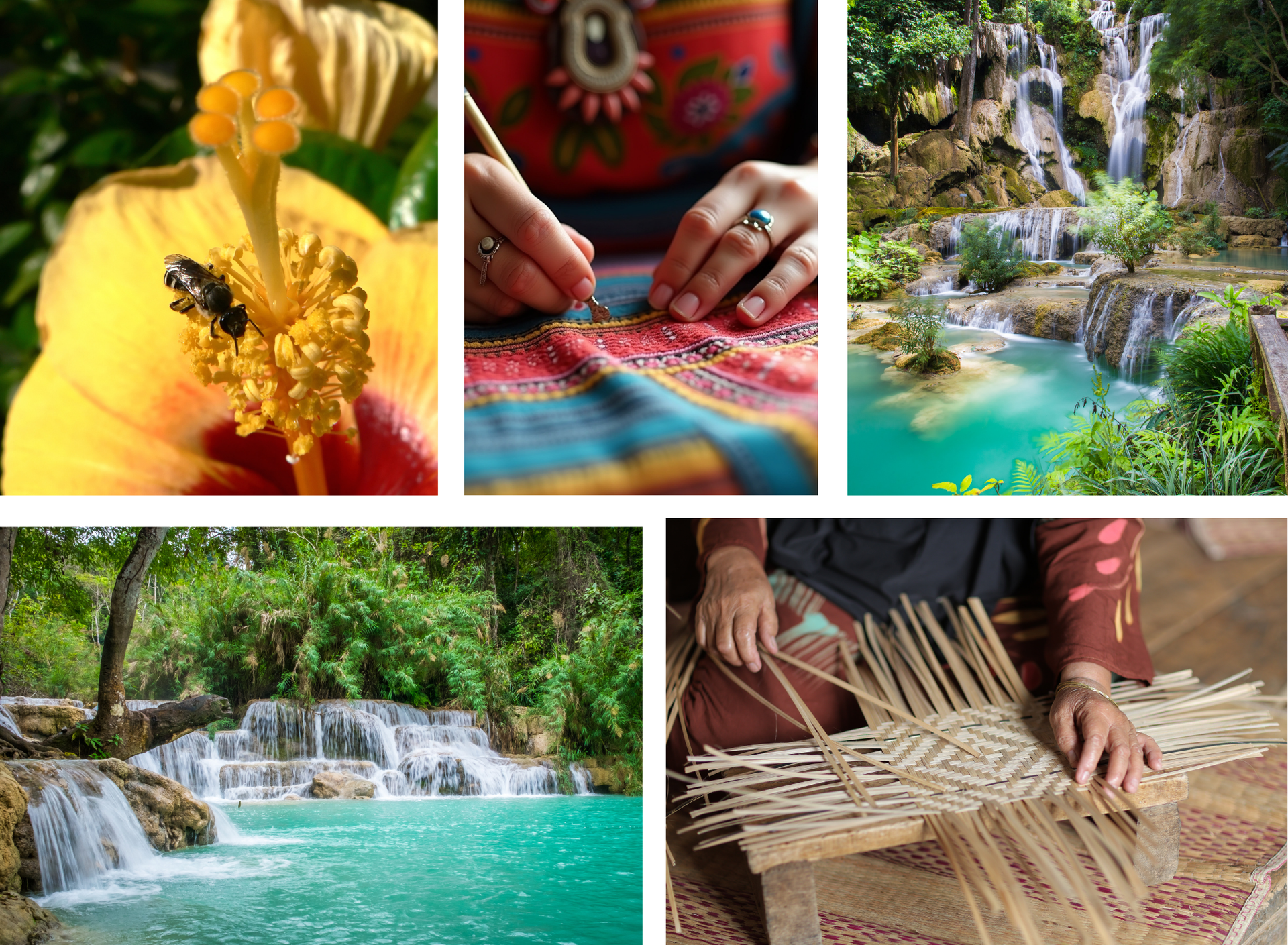
The day begins with an introduction to the daily lives of rice farmers at Living Land Farm. Alongside the farmers, you’ll discover the different stages of rice cultivation, from preparing the fields to the finished product. This experience also offers insight into the making of farming tools and bamboo crafts, including the traditional baskets used to cook rice.
You then explore the farm’s organic vegetable garden, where a variety of vegetables, aromatic herbs and local plants are grown. It’s a chance to learn more about the farming methods used and the produce that plays an important role in Lao cuisine.
Continue to the famous Kuang Si Falls, one of the best-known natural attractions in the Luang Prabang region. In the heart of dense tropical vegetation, the water flows over cascades and limestone formations, creating a series of natural pools in remarkable shades of turquoise. Several spots offer the chance to enjoy the scenery and, when conditions allow, swim in the pools.
On the way back to Luang Prabang, stop at the Ock Pop Tok craft centre, dedicated to preserving and passing on Lao textile skills. Accompanied by a guide, you’ll discover the various stages of silk weaving and fabric dyeing, as well as other traditional techniques such as batik and bamboo craft. A tour of the workshops also gives you the chance to watch the artisans at work.
At the end of the day, settle onto a terrace overlooking the river and enjoy a cocktail at sunset. In this peaceful setting, admire the last rays of sunlight illuminating the lush green hills before the sun disappears behind the mountains—a delightful way to end a day of discovery.
Day 11: LUANG PRABANG - VIENTIANE
Transfer to Luang Prabang train station (without a guide) and 1st-class express train to Vientiane. The capital of Laos, Vientiane retains a strong Asian identity despite the significant influence of French colonial rule.
On arrival, meet your guide and enjoy a tour of the city.
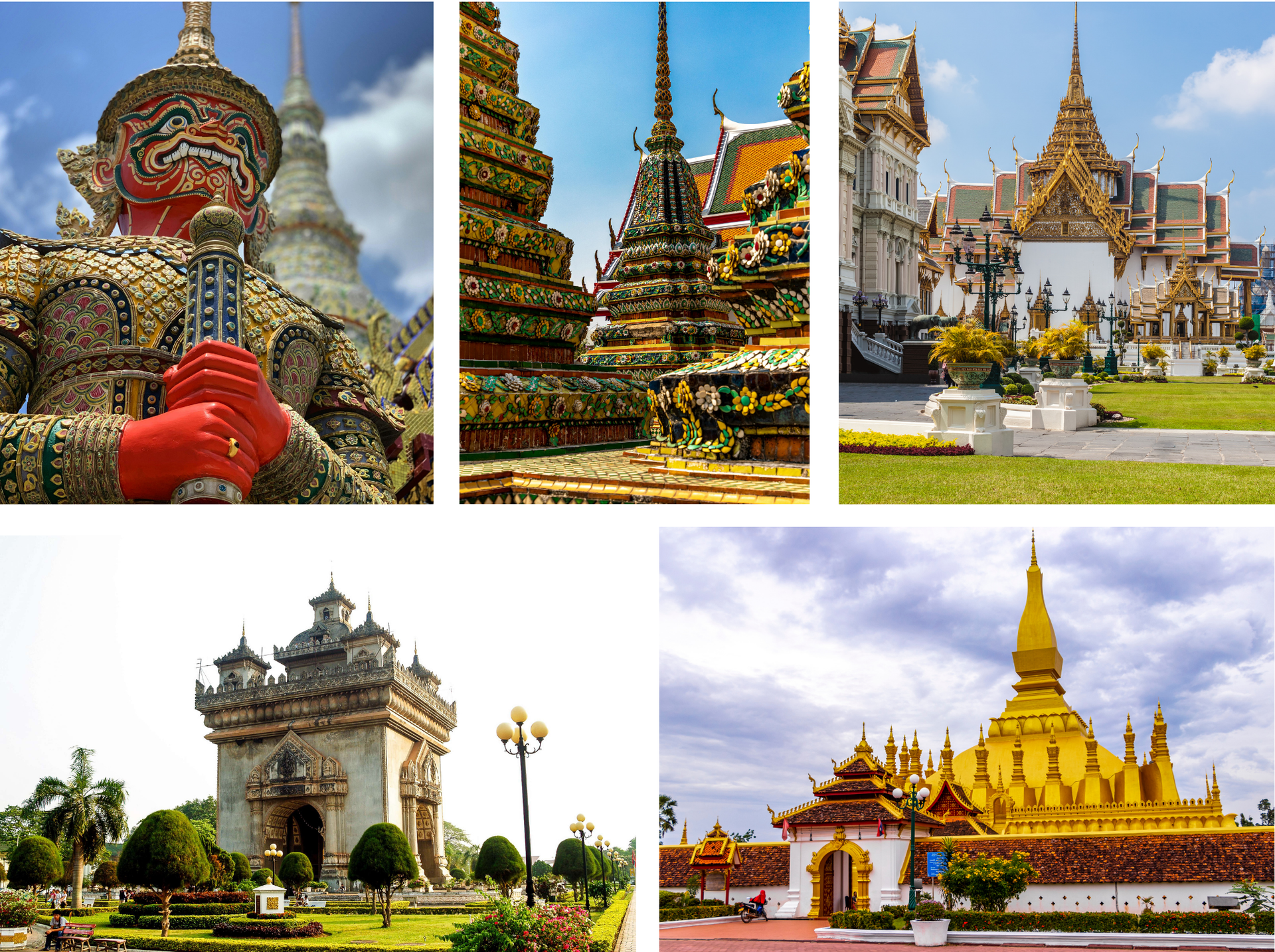
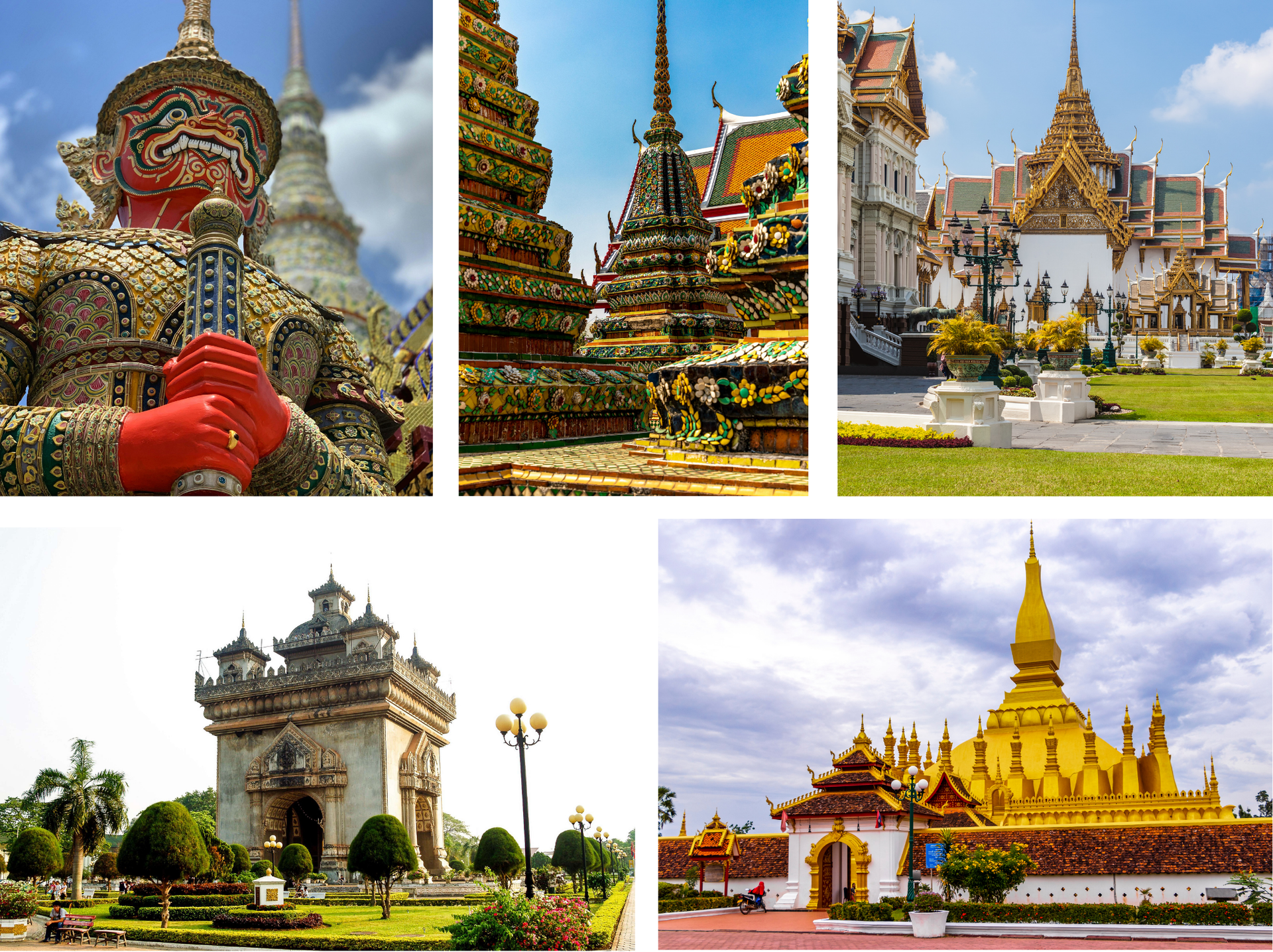
- Wat Sisaket, with its unique Siamese-influenced architecture, has survived thanks to its old Bangkok-style design. It is the largest and most beautiful temple in Vientiane.
- Wat Phra Keo: built in 1565 to house the famous Emerald Buddha and rebuilt in its original form in 1942, this temple is set in a delightful garden. Beneath its distinctive Lao and northern Siamese-style roof, you’ll find beautiful carved wooden panels and graceful columns.
- Pha That Luang: a cloister built around a large stupa, spared when the city was sacked by the Siamese but damaged by Ho bandits in 1873, before being renovated by the French in 1930. It has become a national symbol, representing both the Buddhist religion and the country’s sovereignty. This grand sanctuary is a masterpiece of Lao architecture.
- Patuxay, or the Arc de Triomphe: enjoy views of Vientiane from the top.
- Talat Sao Market:
you’ll find all kinds of goods made in and imported to Laos
Note: You can finish the city tour on foot along the Mekong, admire the sunset and then visit the night market.
Day 12: VIENTIANE - pakse
In the morning, transfer to the airport without a guide for your flight to Pakse in southern Laos. On arrival, meet your French-speaking guide before travelling to the 4,000 Islands region, a vast archipelago shaped by the waters of the Mekong.
Along the way, visit the impressive Pha Pheng Falls, one of the major natural attractions in the south of the country. You’ll then continue to the Nakasang pier, where you’ll board a local boat to cross the Mekong and reach Khone Island.
Day 13: KHONE ISLAND - CHAMPASAK
4,000 Islands
Travel by local tuk-tuk to the eastern part of the island. Along the way, discover local life and enjoy incredible views of the river. Visit the small southern village of Ban Hang Khone, just a stone’s throw from Cambodia, and take in panoramic views of the Mekong Delta. Arrive at the famous Liphi Falls, among the largest waterfalls in Laos by volume. Admire the cascades above the rushing waters from a network of suspension bridges that seem to dance between the islands. Continue along the old railway route across the island to return to your starting point.
Champasak
Continue to Champasak (approx. 3 hours) to Wat Phou, a pre-Angkorian temple listed as a UNESCO World Heritage Site.
Travel by electric vehicle to the base of sacred Mount Phou Kao, passing two artificial lakes, then visit the finely carved ruins of the Hindu Khmer palaces. Ancient stairways lined with frangipani trees lead up to the third temple, a unique structure dedicated to Shiva.
Day 14: CHAMPASAK
Early in the morning, depart for Paksong, considered the heart of coffee production in Laos and the main gateway to the Bolaven Plateau, perched at an altitude of around 1,300 metres. This fertile region, with its lush green scenery, is home to several Mon-Khmer communities and has a long agricultural tradition. Introduced in particular during the French colonial period, coffee cultivation now plays an essential role in the local economy and is renowned well beyond the country’s borders.
In a Jeep, set off to explore the plateau’s more remote landscapes, passing plantations, forests and rural tracks. You’ll be welcomed by a passionate coffee grower, who will first take you to an impressive waterfall, where you can go for a swim. You then visit his farm to learn about his work and enjoy a lunch of local specialities.
After lunch, stroll through the coffee plantations to learn more about the growing methods and the work carried out here. You’ll also watch a traditional coffee-roasting demonstration before continuing along small paths winding between plantations and tropical vegetation.
The adventure continues by Jeep to the most remote areas of the Bolaven Plateau, where you’ll discover traditional bamboo-built villages and meet the Laven and Souay communities. This stop offers a glimpse into their way of life, traditions and daily routines in this still-rural region of southern Laos.
Return to Champasak at the end of the day.
Days 15 & 16: BANGKOK - switzerland
Private transfer to Ubon Ratchathani Airport (UBP) for your flight to Bangkok, then your return flight to Switzerland.
From CHF 4'990.- per person
PRICE INCLUDES:Price per person in a double room.
- International economy-class flights with Etihad Airways.
- Domestic flights.
- Airport and security taxes.
- Accommodation for a total of 13 nights on site in a double/twin room.
- Meals as specifically mentioned.
- The visits and activities listed, including entrance fees.
- The services of a local French-speaking guide at each stop.
- Assistance from our local office.
PRICE DOES NOT INCLUDE:
- Advance seat reservations on flights: fares vary by airline (please contact us if you would like to reserve seats in advance).
- Meals not mentioned.
- Drinks.
- Tips and personal expenses.
- Activities and excursions not mentioned.
- Any visa fees (see “Practical Information”).
- Travel insurance covering cancellation and repatriation.
More information & booking