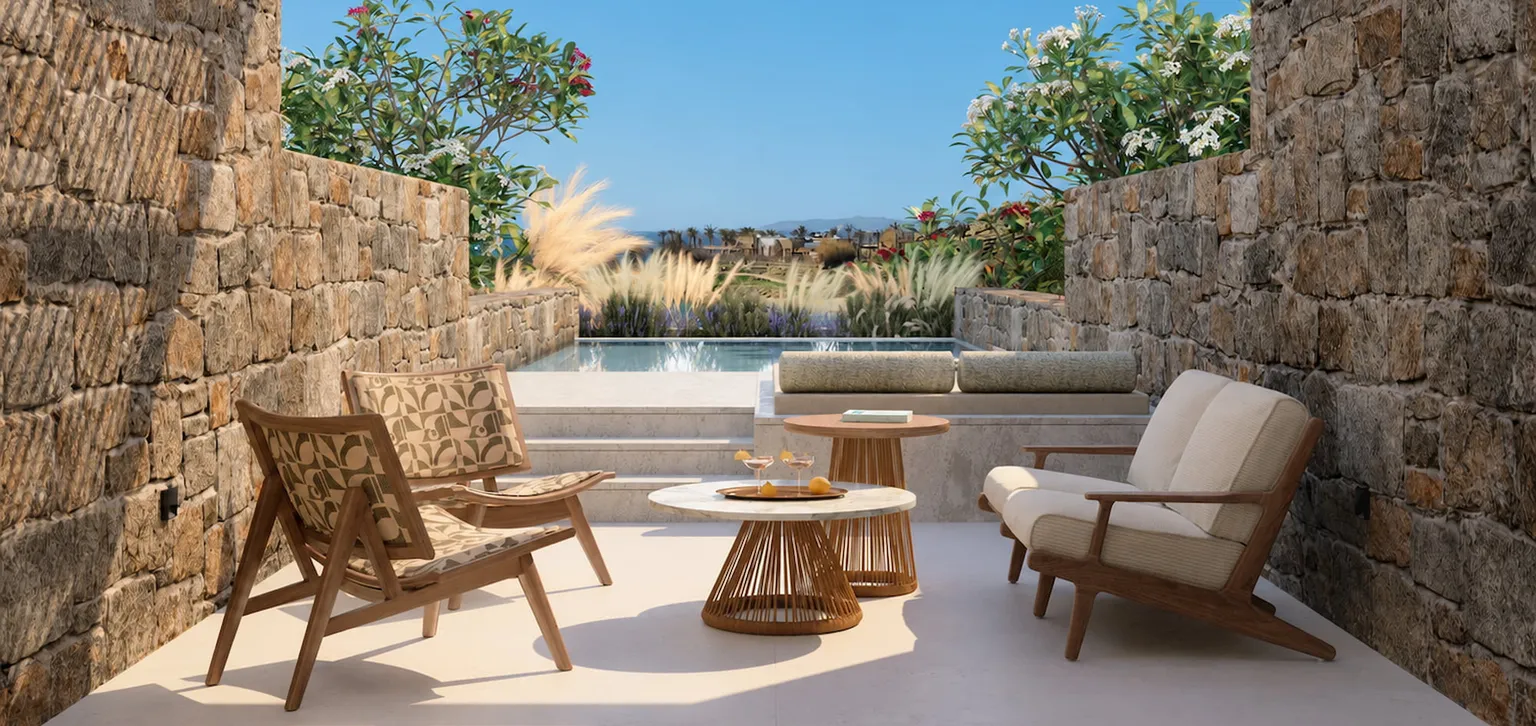
The most beautiful islands of the Cyclades
The Cyclades, situated in the heart of the Aegean Sea, are one of Greece’s most iconic archipelagos. Renowned for their whitewashed houses, blue domes and sun-drenched landscapes, they offer a unique blend of tradition, history and natural beauty. This group of around 220 islands, of which about thirty are inhabited, attracts travellers from all over the world every year, drawn by idyllic beaches, picturesque villages and an authentic atmosphere.
Steeped in history, the Cyclades take their name from the Greek word ‘kyklos’, meaning ‘circle’, as they are arranged in a circle around the sacred island of Delos, which in ancient times was considered the birthplace of Apollo and Artemis. Even today, this cultural heritage is evident in the ancient ruins, local traditions and the distinct identity of each island.
With lively festivals, Mediterranean cuisine and spectacular scenery ranging from volcanic cliffs to golden sandy beaches, the Cyclades offer an impressive variety. But with so much choice, it can be difficult to know which islands to prioritise.
In this article, we take you on a journey to discover 10 must-visit islands in the Cyclades, each with its own unique charm and hidden treasures.
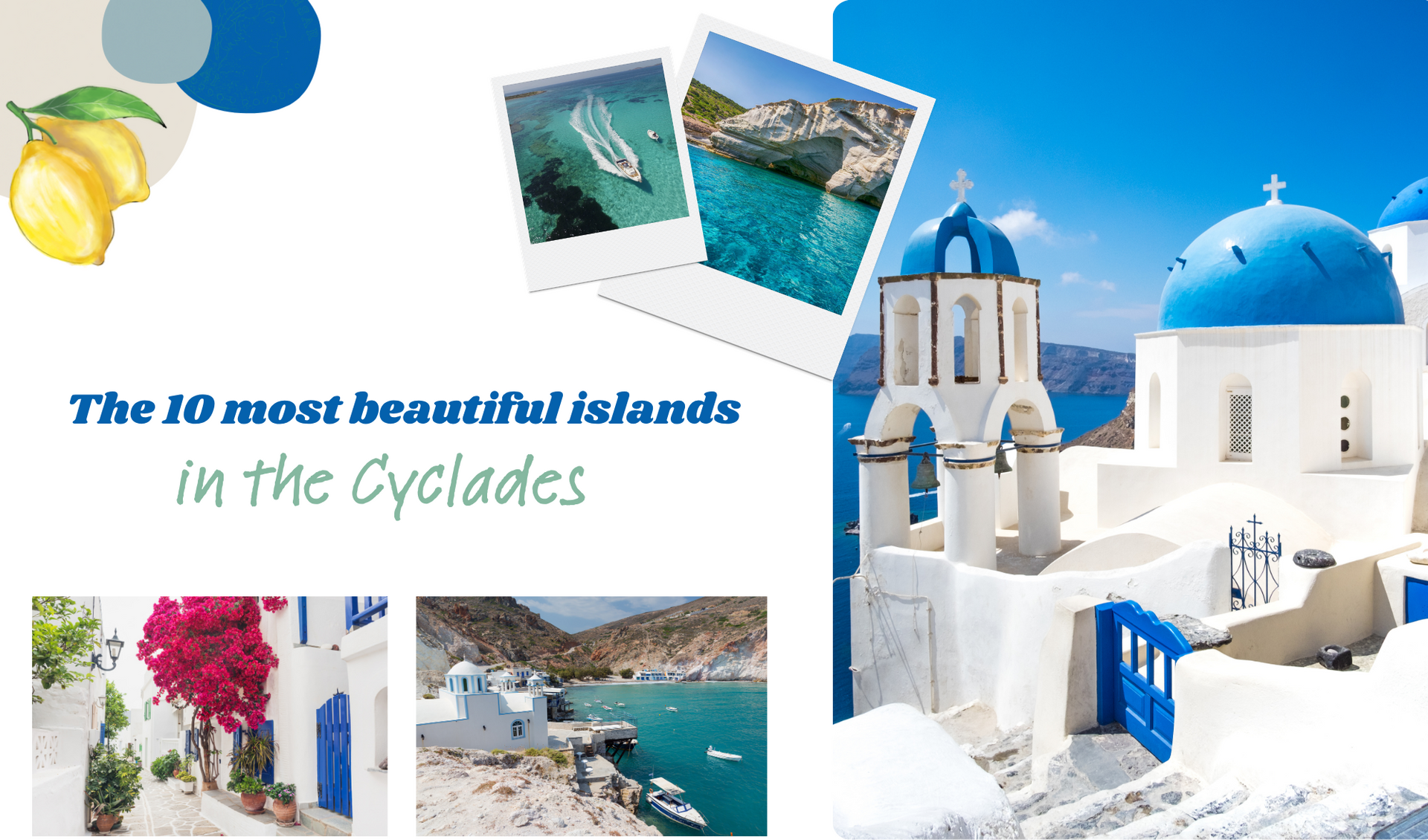
Santorini – The island of legendary sunsets
- A history shaped by the volcano
Santorini’s identity is inextricably linked to its volcano. Around the 17th century BC, a major eruption — often associated with the Minoan civilisation — completely transformed the island. It created the famous caldera and buried the ancient city of Akrotiri, which is now remarkably well preserved. Akrotiri is often compared to Pompeii: here one finds multi-storey houses, colourful frescoes and advanced urban planning, evidence of a sophisticated society focused on maritime trade. This catastrophe is even said to have inspired certain myths, such as that of Atlantis.
- A strong religious tradition
Santorini is deeply steeped in the Greek Orthodox faith. The island is home to hundreds of chapels and churches, often featuring the iconic blue domes. These buildings are not merely decorative: they shape the rhythm of local life.
Religious festivals (panigiria) are key events in the local culture: they combine spiritual celebrations, traditional music, dancing and communal meals. Every village honours its patron saint with great fervour.
- Cycladic architecture and adaptation to the climate
The architecture of Santorini is typically Cycladic, but with a distinctive feature linked to its volcanic terrain. The cave houses, carved into the rock, help to keep the temperature cool in summer and mild in winter. Colours also serve a purpose: white reflects heat, whilst blue (doors, domes) evokes the sea and the sky. This minimalist style has become a symbol of Greece throughout the world.
- A unique wine-growing culture
Santorini has a wine-growing tradition dating back thousands of years. Thanks to its volcanic soil and dry climate, the vines grow in a very distinctive way: the vines are trained into a basket-like shape (known as a kouloura) to protect them from the wind and retain moisture. The iconic grape variety is Assyrtiko, which produces dry, mineral-rich white wines that are highly regarded. The sweet wine Vinsanto, produced since ancient times, is also part of the island’s cultural heritage.
- Cultural life and local traditions
Despite its small size, Santorini boasts a vibrant cultural scene. Music, film and art festivals are held throughout the year, particularly in Fira. Traditional crafts are also kept alive: pottery, weaving, and local cuisine featuring speciality produce such as Santorini cherry tomatoes and yellow broad beans (fava), grown on the volcanic soil.
- An island caught between myth and modernity
Today, Santorini is a place where tradition and modernity coexist. Behind the luxury hotels and spectacular views, the island retains a strong identity, deeply rooted in its history, its beliefs and its connection to nature. Every stone, every church, every vineyard tells a story — that of a people who have adapted to an extreme environment to make it one of the most unique places in the Mediterranean.
Best time to visit
May–June & September–October: ideal (fewer crowds, perfect weather)
July–August: lovely, but very touristy and expensive
April & October: quieter, perfect for exploring
Must-see places
- Oia : famous for its spectacular sunsets
- Fira : a lively capital with views of the caldera
- Imerovigli : quieter, with incredible views
- Pyrgos: a traditional village with fewer tourists
And above all, don’t miss:
- The ancient site of Akrotiri
- A hike between Fira and Oia (stunning views)
- A boat trip in the caldera
The beaches:
Santorini doesn’t have any “traditional” white sandy beaches:
- Kamari & Perissa : black volcanic sand
- Red Beach : spectacular with red cliffs
- White Beach : more unspoilt, accessible by boat
Food & wine:
The island is famous for:
- Assyrtiko white wine
- Vinsanto sweet wine
- Local specialities such as fava (mashed broad beans)
A wine tasting at a vineyard is an unmissable experience.
Getting around:
- Hiring a quad bike or a car is very convenient.
- There are buses, but they can get very crowded in high season.
- Also, the distances are short, but the roads are winding.
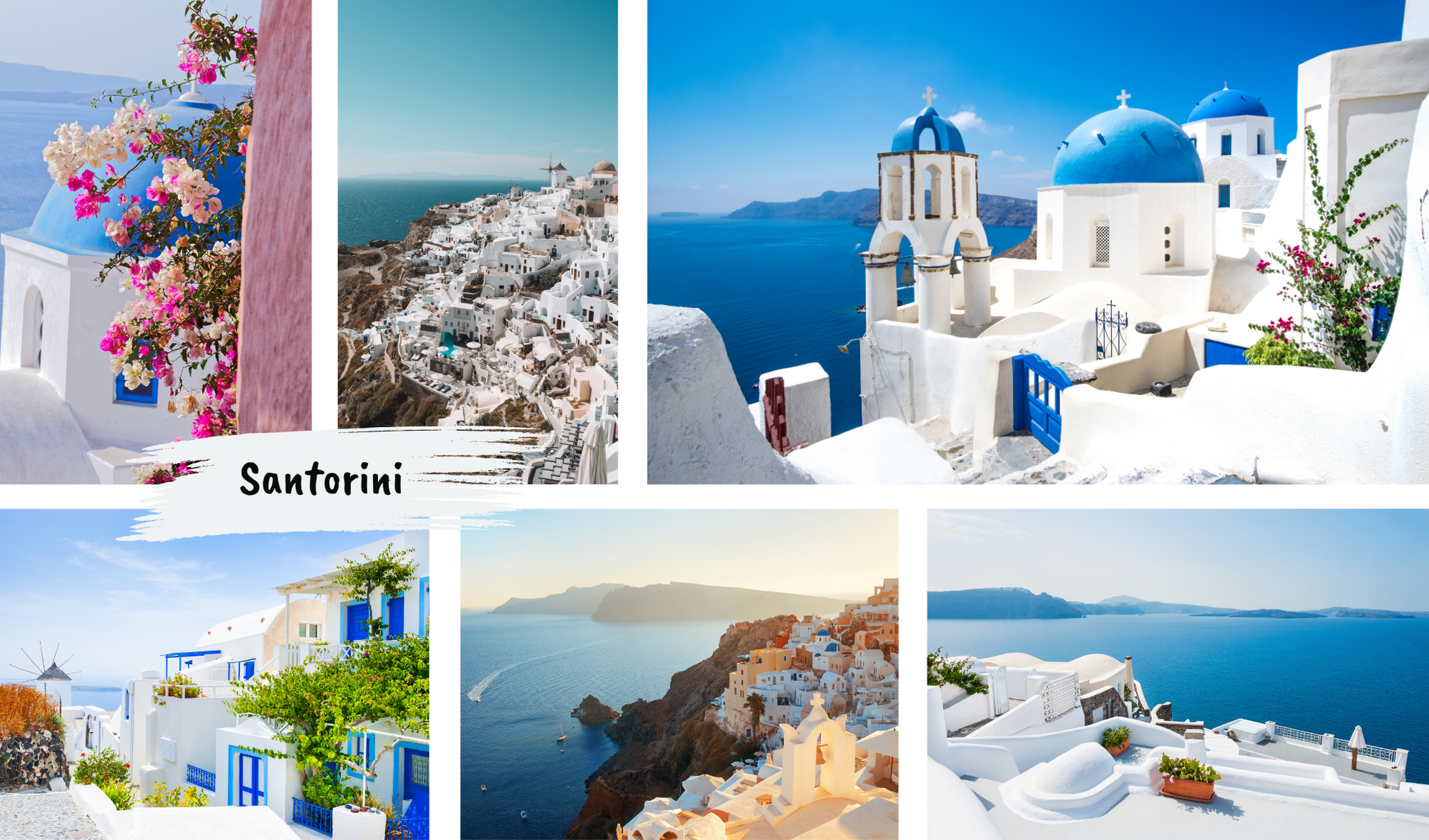
Mykonos – The vibrant elegance of the Cyclades
- A history shaped by the sea and trade
Mykonos’s identity is closely linked to its strategic position in the Aegean Sea. Since ancient times, the island has been an important hub for trade between Crete, Attica and the other Cyclades. The archaeological remains, although less well-known than those on Santorini, show that Mykonos was inhabited as early as the Proto-Cycladic period, and its development was shaped by Greek, Roman and Venetian influences. In the Middle Ages, the island was frequently attacked by pirates. To protect themselves, the inhabitants built hilltop, fortified villages, whilst the houses and labyrinthine alleyways served to slow down the invaders. These medieval defences are still visible in neighbourhoods such as Chora, the historic capital.
- A living religious tradition
Mykonos is deeply steeped in the Orthodox faith. There are hundreds of chapels and churches scattered throughout every village, often adorned with traditional icons and frescoes. These buildings are not merely decorative: they punctuate life on the island and are at the heart of the panigiria, local religious festivals that combine spiritual celebrations, dancing, singing and communal meals. Each village honours its patron saint with fervour, and these festivities also attract many visitors.
- Cycladic architecture and adaptation to the wind
Like all the Cyclades, Mykonos is characterised by its white houses with colourful shutters, but the island has a distinctive feature: its architecture is designed to withstand the fierce winds of the Aegean Sea. The narrow, winding streets offer shelter to the inhabitants, and the white, cube-shaped houses reflect the summer heat. The famous windmills, standing on the hills of Chora, bear witness to local ingenuity: they were used to grind wheat using the prevailing winds and are now one of the island’s most iconic symbols.
- A culinary and maritime tradition
Mykonos boasts a rich culinary culture, drawing inspiration from both the sea and the land. Fresh fish and seafood, local cheese, Mediterranean vegetables and locally produced wines are an integral part of the island experience. Although Mykonos does not have vineyards as famous as those of Santorini, the local cuisine strikes a balance between simplicity and refinement, featuring traditional produce and recipes passed down through the generations.
- Local culture and traditions
Mykonos is renowned for its lively social scene and festive atmosphere, but the island also boasts a vibrant cultural heritage: theatres, small art galleries and music festivals punctuate the summer months. Traditional crafts thrive, with the production of jewellery, pottery and textiles. The island’s culture blends modernity with a respect for local customs.
- An island where legend meets modernity
Today, Mykonos is known throughout the world for its vibrant energy, lively beaches and cosmopolitan lifestyle. But behind the tourist bustle, it retains a strong identity, shaped by history, religious traditions, defence against pirates and a deep connection to the sea. Every alleyway, every windmill, every chapel tells the story of an island that has successfully blended protection, trade and festivity to become one of the jewels of the Cyclades.
Best time to visit
- May–June & September–October: the perfect time to enjoy the beaches and villages without the crowds
- July–August: lovely but very touristy and more expensive, especially during festivals and at clubs
- April & October: quieter, perfect for exploring the island and soaking up the local culture
Must-see places
- Chora (Mykonos town) : a lively centre with its white-washed streets, shops and restaurants
- Little Venice: a romantic seaside neighbourhood, famous for its sunsets
- Ano Mera a traditional village in the centre of the island, quieter, with a charming monastery
- Windmills:
the island’s iconic symbol, best seen at sunset
And above all, don’t miss:
- A stroll through the labyrinthine streets of Chora
- A trip to the neighbouring island of Delos, a major archaeological site
- Sunset views from Little Venice or the windmills
The beaches
Mykonos is famous for its beaches, which vary greatly depending on your preference:
- Paradise & Super Paradise: lively, party-oriented beaches, perfect for a holiday
- Elia & Platis Gialos: more family-friendly, well-equipped beaches
- Agrari & Fokos:
wilder beaches, ideal for relaxing away from the crowds
Cuisine and specialities
The island is famous for:
- Fresh seafood and fish
- Local cheeses and traditional Greek dishes (frittata, louza, Greek salad)
- Wines produced on the island and in the surrounding area
Sampling local specialities in a traditional tavern is a must.
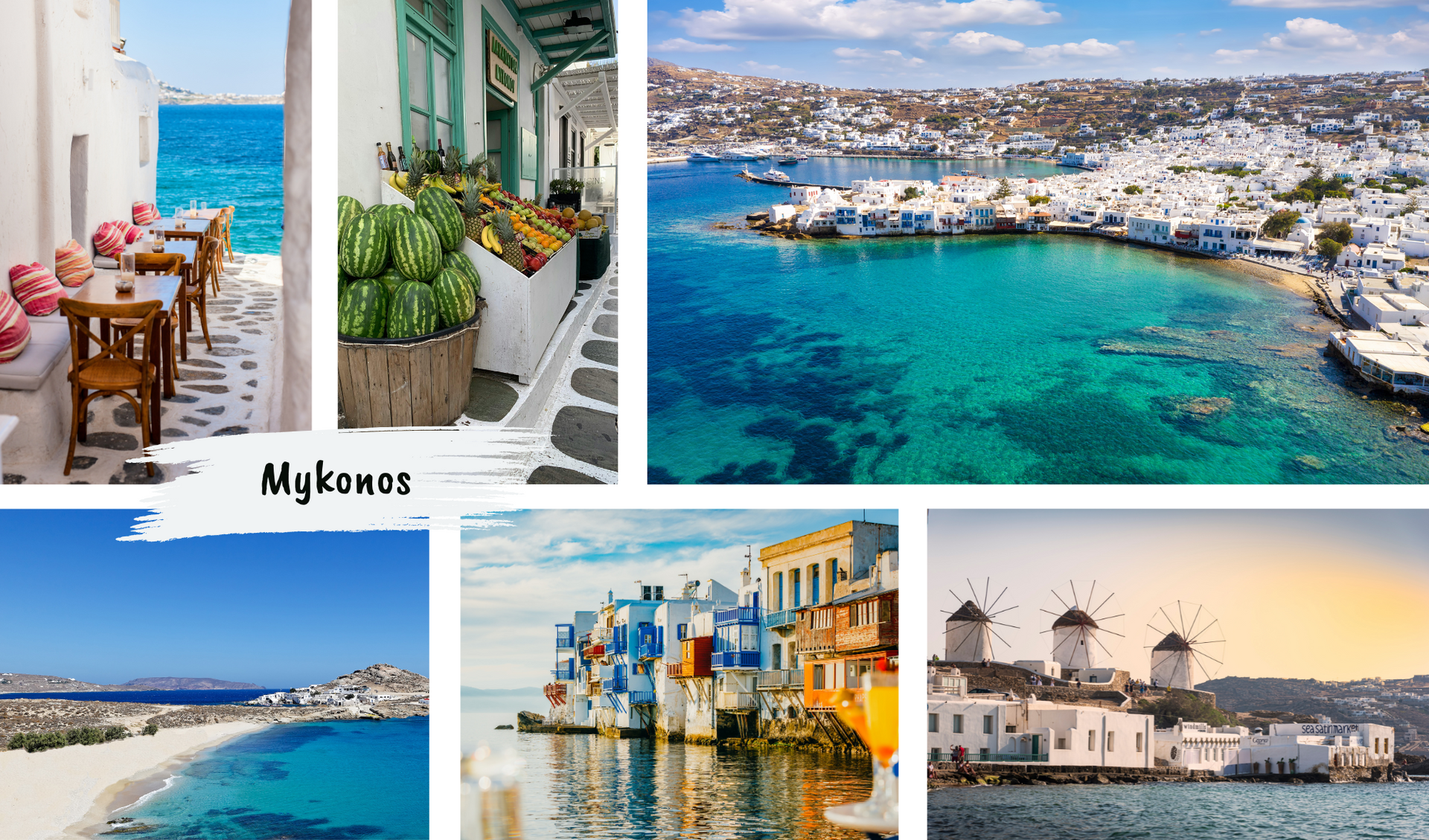
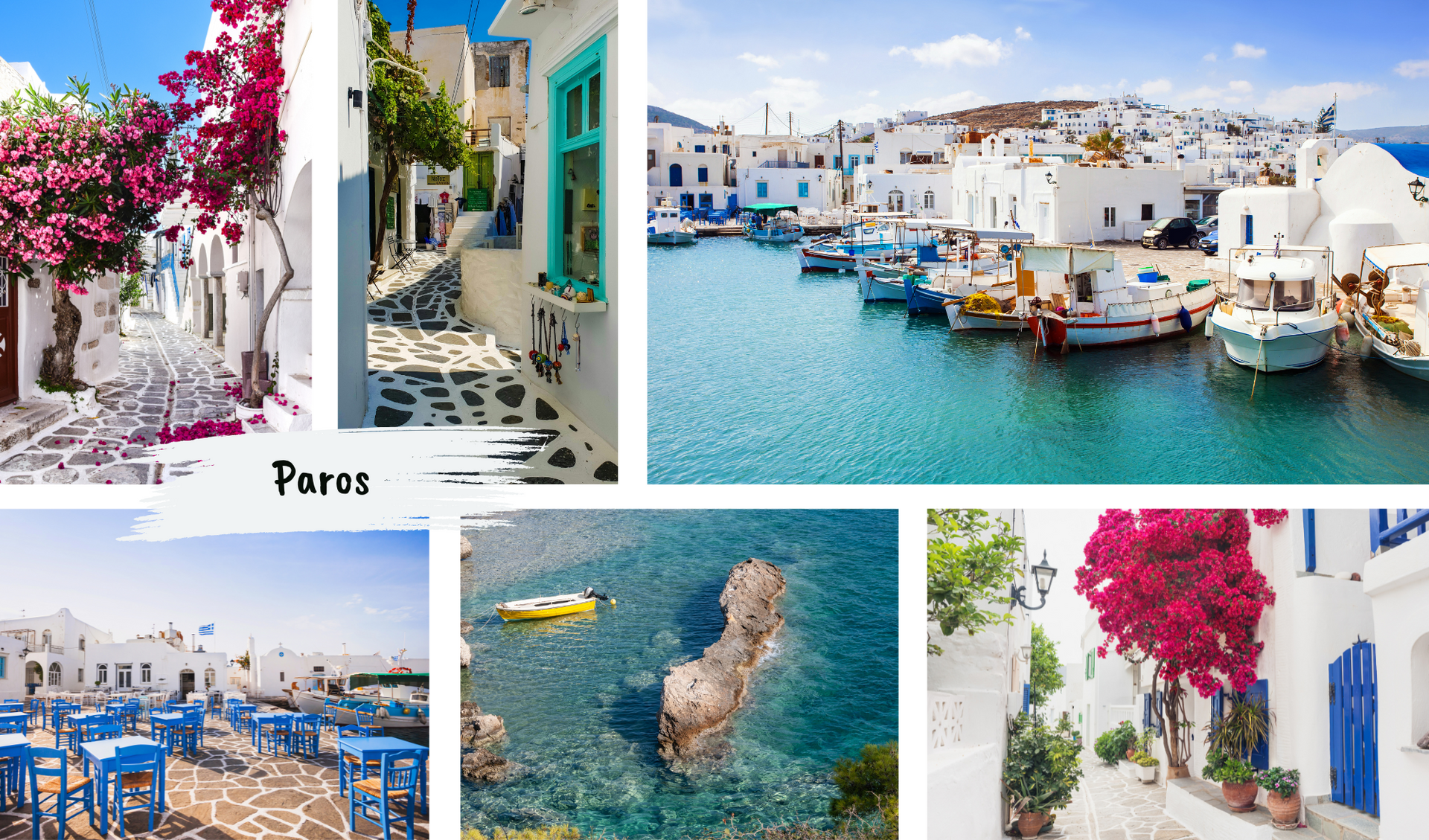
Paros – The authentic, sun-drenched charm of the Cyclades
- An island with genuine charm
Paros is an island in the Cyclades that captivates visitors with its perfect balance of natural beauty, preserved traditions and a lively atmosphere. It has been inhabited since prehistoric times, and its history is marked by the production of white marble, famous in antiquity, which was used to create sculptures and monuments throughout Greece. The island boasts a rich architectural heritage: villages with white houses and colourful shutters, Byzantine churches adorned with ancient frescoes, and windmills that evoke Paros’s agricultural history. The town planning reflects both defence against pirates and harmony with the natural landscape.
- Religious and cultural traditions
The Orthodox faith still shapes life on the island. Every village has its own little church, often adorned with icons and frescoes, and organises local religious festivals (panigiria) combining prayer, dancing, music and local cuisine. These celebrations are a key way to discover the soul of Paros and meet its people.
- Architecture and climate adaptation
The villages of Paros, such as Naoussa and Parikia, are characterised by whitewashed, cube-shaped houses, cobbled streets and balconies adorned with flowers. The materials and designs were chosen to provide protection from the sun and wind whilst remaining aesthetically pleasing, creating an elegant and functional Cycladic style.
- Beaches and nature
Paros offers a variety of beaches:
- Kolymbithres, with its rock formations sculpted by erosion
- Golden Beach, ideal for kitesurfing and windsurfing
- Santa Maria and Pounda, perfect for water sports or relaxation
The island also has hiking trails that allow you to explore the hills, olive groves and secluded little chapels, far from the crowds.
- Gastronomy and culinary traditions
Paros boasts a hearty Mediterranean cuisine, showcasing local produce and traditional recipes: cheeses such as gouna, olives, fresh fish and vegetables. Local wines complement this range of flavours perfectly, featuring grape varieties typical of the Cyclades.
- Cultural life
Paros blends tradition with modernity: music and theatre festivals take place throughout the year, whilst artisans carry on ancient crafts such as pottery, weaving and marble sculpture. The island is thus a place where history and creativity come together at every turn.
Best time to go:
- May–June & September–October: the perfect time to enjoy the beaches and villages without the crowds
- July–August: lovely but crowded with tourists, especially in the main villages
- April & October: quieter, perfect for exploring the island and its traditional villages
The must-see places
- Parikia : the capital, with its cobbled streets, bustling harbour and the Byzantine church of Panagia Ekatontapiliani
- Naoussa: a charming village, famous for its picturesque harbour and traditional tavernas
- Lefkes : a typical mountain village, ideal for exploring authentic Cycladic architecture
- Marpissa & Piso Livadi : small, less touristy villages, perfect for a leisurely stroll
Not to be missed:
- A stroll through the narrow streets of Parikia and Naoussa
- A tour of historic sites and Byzantine churches
- A hike along the mountain trails to Lefkes and Prodromos
The beaches
Paros offers a variety of beaches:
- Kolymbithres: golden sand and unique rock formations
- Golden Beach: perfect for kitesurfing and windsurfing
- Santa Maria & Pounda: perfect for swimming and water sports
- Faragas & Molos: quieter and more secluded, perfect for relaxing
Cuisine & specialities
The island is famous for:
- Fresh seafood and fish
- Local cheeses such as gouna and traditional products
- Traditional Greek dishes and local specialities featuring vegetables and olives
👉 Sampling these products in a traditional tavern is an unmissable experience.
Getting around
- Hiring a quad bike, scooter or car is the most convenient way to explore the island
- Buses are available but services may be limited and less frequent out of season
- Distances are short, but some mountain roads are narrow
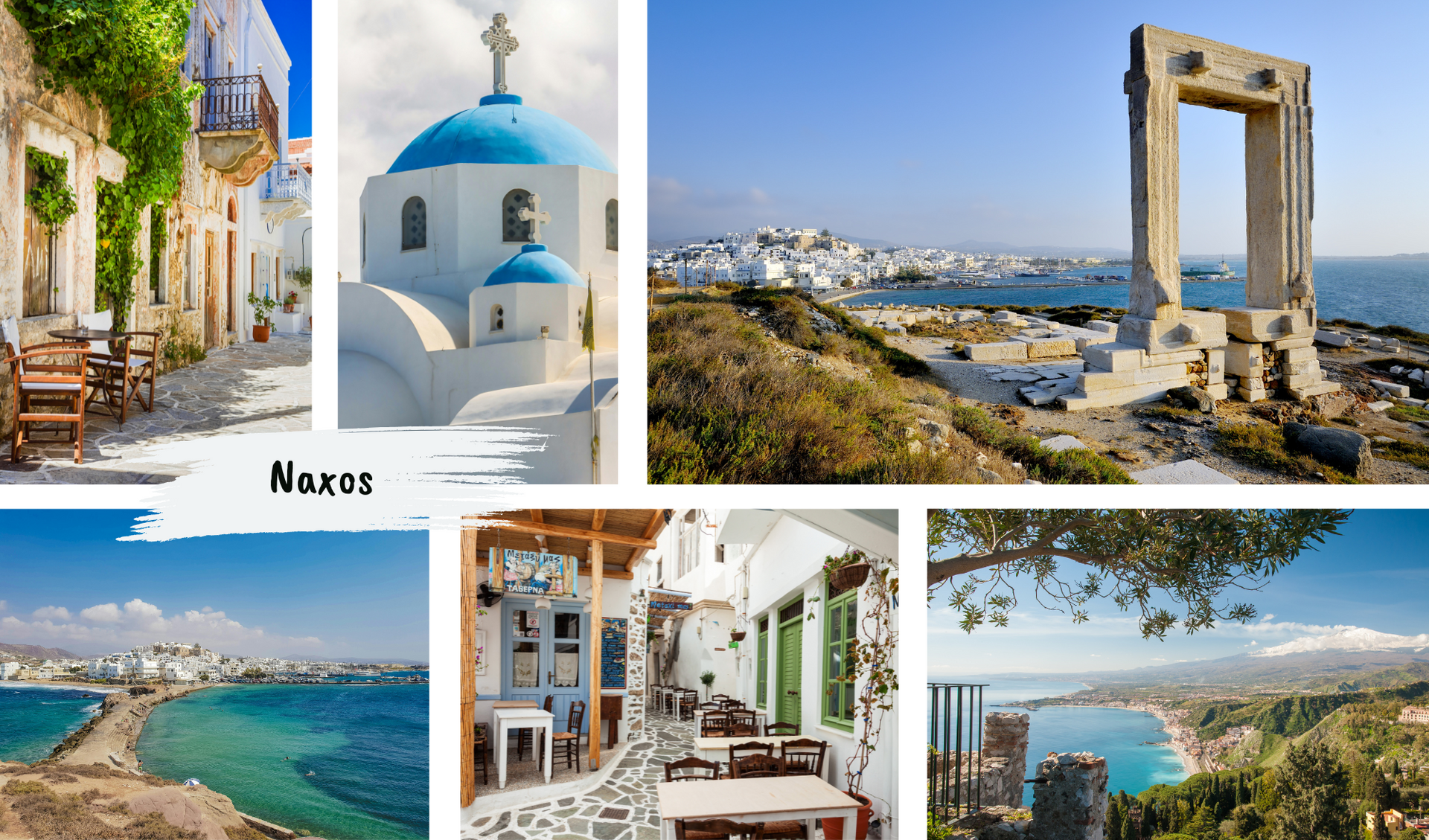
Naxos - The fertile and majestic island of the Cyclades
- A history shaped by agriculture and trade
Naxos’s identity is deeply rooted in its fertile location at the heart of the Cyclades. Since ancient times, the island has been a major agricultural centre, renowned for its olives, vines and cereals, whilst playing a strategic role in maritime trade between the Cyclades, Crete and the Greek mainland. Ancient ruins, including the famous Temple of Demeter and traces of proto-Cycladic settlements, bear witness to a continuous human presence and ancient prosperity. In the Middle Ages, Naxos was the heart of the Venetian Duchy of the Cyclades, and the inhabitants built hilltop, fortified villages to protect themselves from pirates and invaders. The capital, Chora, still retains the narrow streets and medieval castle, remnants of this defensive era.
- A living religious tradition
Naxos is deeply rooted in the Orthodox faith. Every village has its own small church or chapel, often adorned with frescoes and icons, and organises panigiria – local festivals that combine religious celebrations, music, dancing and traditional meals. These festivities punctuate the daily lives of the locals and offer visitors an authentic glimpse into the local culture.
- Cycladic architecture and adaptation to the terrain
Like the rest of the Cyclades, Naxos is home to white houses with colourful shutters, but the island stands out for its hilltop villages and stone buildings that blend seamlessly into the hills and mountains. The labyrinthine alleyways offer shelter from the wind and heat, and the Venetian castle in Chora overlooks the town, a reminder of the island’s defensive past.
- A culinary and agricultural tradition
Naxos is renowned for its local produce: cheeses such as graviera, potatoes, olives, fresh fruit and vegetables, as well as its wines. The island’s cuisine reflects the abundance of its fertile soil and the importance of agriculture in its culture, offering simple yet flavourful dishes passed down through the generations.
- Cultural life and local traditions
Naxos conserve un patrimoine culturel vivant : festivals de musique, danses traditionnelles, artisanat local (poterie, tissage, sculptures sur pierre) et petites galeries d’art. L’île combine modernité et respect des traditions, offrant une expérience authentique, loin du tourisme excessif.
- An island where nature meets legend
Today, Naxos captivates visitors with its mountains, golden beaches and traditional villages. But beyond its landscapes, it retains a strong identity, rooted in its agriculture, medieval history and religious traditions. Every temple, every alleyway, every chapel tells the story of an island that has managed to preserve its authenticity whilst adapting to the times and to visitors, making Naxos one of the most complete and fascinating islands in the Cyclades to discover.
Best time to visit
- May–June & September–October: ideal (fewer people, perfect weather)
- July–August: lovely, but very touristy and expensive
- April & October: quieter, perfect for exploring
The must-see places
- Chora (the main town): charming, with white-washed narrow streets and a Venetian castle
- Portara: a massive ancient gateway overlooking the sea, an iconic spot at sunset
- Apiranthos: a charming, traditional mountain village built of marble
- Filoti: a traditional village at the foot of Mount Zas
And above all, don’t miss:
- The Temple of Demeter (a well-preserved ancient site)
- A hike up Mount Zas (the highest peak in the Cyclades)
- A tour of the inland villages (a very local experience with few tourists)
The beaches
Naxos is renowned for its long, sandy beaches:
- Agios Prokopios & Agia Anna: easy to reach, with turquoise waters
- Plaka: a long, unspoilt and peaceful beach
- Mikri Vigla: ideal for windsurfing and water sports
- Alyko: more unspoilt, with dunes and natural landscapes
Cuisine & specialities
The island is famous for:
- Graviera cheese from Naxos: mild or slightly tangy, a must-try
- Potatoes from Naxos: famous throughout Greece for their unique flavour
- Lemon liqueur or kitron 🌿: a traditional local drink
- Hearty traditional dishes: meat, fresh vegetables, and farm produce from the island
👉 Foodie tip: opt for village taverns rather than those by the sea to sample authentic, local flavours.
Getting around:
- Hiring a car is highly recommended
- There are buses, but they are limited when it comes to exploring the whole island
- Distances are greater than on other Cycladic islands, but the roads are good
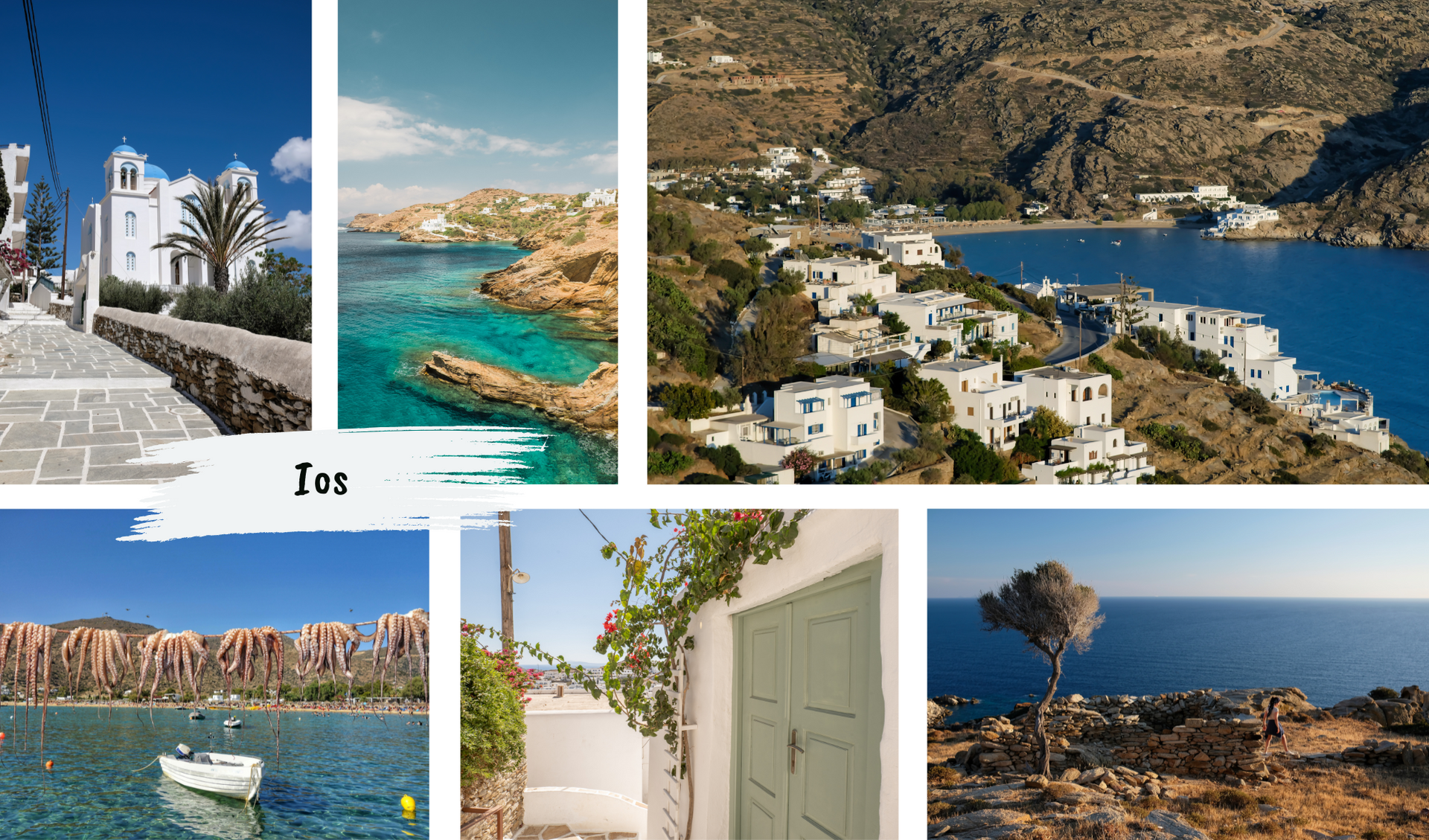
Ios - The lively, sun-drenched island of the Cyclades
- A history shaped by the sea and young people
The identity of Ios is deeply rooted in its strategic position within the Cyclades and its role in ancient maritime trade. Since ancient times, the island has been a hub of trade and a refuge for sailors and travellers. It is home to pre-Hellenic and ancient ruins, as well as monuments dedicated to Homer, who, according to tradition, is said to be buried on the island. Over the centuries, Ios has experienced periods of Venetian and Ottoman rule, with hilltop villages designed to protect the inhabitants from pirates and invasions. The capital, Chora, still retains its white-washed streets and typical Cycladic architecture, bearing witness to a past shaped by both defence and seafaring.
- A vibrant festive tradition
Ios is now famous for its nightlife and summer parties, but the island has also retained its local roots. Each village organises its own traditional festivals (panigiria), combining music, dance and local cuisine. These celebrations set the pace of life on the island and offer visitors a chance to immerse themselves in authentic Cycladic culture, far beyond the typical tourist nightlife.
- Cycladic architecture and adaptation to the terrain
Like all the Cyclades, Ios features white houses with colourful shutters and narrow alleyways that offer shelter from the wind and heat. The island is distinguished by its hilltop villages and winding stairways that follow the contours of the hills and rocky terrain. Chora, with its labyrinthine alleyways and small squares, perfectly embodies the harmony between Cycladic aesthetics and practical design.
- A culinary and maritime tradition
The cuisine of Ios reflects its island culture: fresh fish and seafood, simple dishes made with local vegetables, and cheeses and honey produced on the island. Village tavernas and small local grocery shops offer a chance to sample the island’s authentic flavours, blending maritime influences with the Cycladic heritage.
- Cultural life and local traditions
Ios boasts a vibrant cultural heritage: traditional music, dance, local crafts (pottery, weaving, stone carving) and cultural events in the summer. The island blends modernity with local traditions, offering visitors an authentic experience where lively festivities intertwine with age-old culture.
- An island where fun and nature come together
Today, Ios charms visitors as much with its golden beaches and secluded coves as with its lively nightlife and youthful, cosmopolitan atmosphere. But behind this reputation for partying, the island retains a strong identity, rooted in its maritime history, local traditions and Cycladic architecture. Every alleyway, every chapel, every cove tells the story of an island that has managed to preserve its authenticity whilst opening up to modern travellers, making Ios one of the most dynamic and captivating islands in the Cyclades to discover.
Best time to visit:
- May–June & September–October: ideal (perfect weather, fewer people, a peaceful atmosphere before and after the summer season)
- July–August: very beautiful but more touristy, especially in Chora and the nightlife areas (still quieter than Mykonos)
- April & October: perfect for exploring the island, hiking and enjoying the countryside and villages
The must-see places
- Chora (the main town): white-washed alleyways, lively little squares, traditional bars and cafés
- Mylopotas: the main beach with turquoise waters and water sports
- Maganari & Koumbara: quieter, unspoilt coves
- Filoti Hommère (tombs and monuments): ancient sites linked to the island’s legend
And above all, don’t miss:
- A hike to the summit of Ios for panoramic views of the Cyclades
- Explore the inland villages to discover the local way of life
- Visit the small churches and chapels dotted around the island
The beachs
Ios is famous for its diverse beaches:
- Mylopotas: golden sand, water sports and a lively atmosphere
- Mylopotas Beach & Manganar: long, quieter and unspoilt stretches of sand
- Kolitsani & Agia Theodoti: secluded coves accessible after a short walk
Cuisine & specialities
The island is famous for:
- Fresh fish and seafood
- Simple, tasty traditional Greek dishes
- Local cheeses and honey
- Lemon liqueur or liqueurs made from local herbs
👉 Sampling the local specialities in village tavernas is an unmissable way to experience the local culture.
Se déplacer
- Hiring a quad bike or a car is very convenient
- Buses are available but can get very crowded in high season
- Distances are short, but the roads are winding
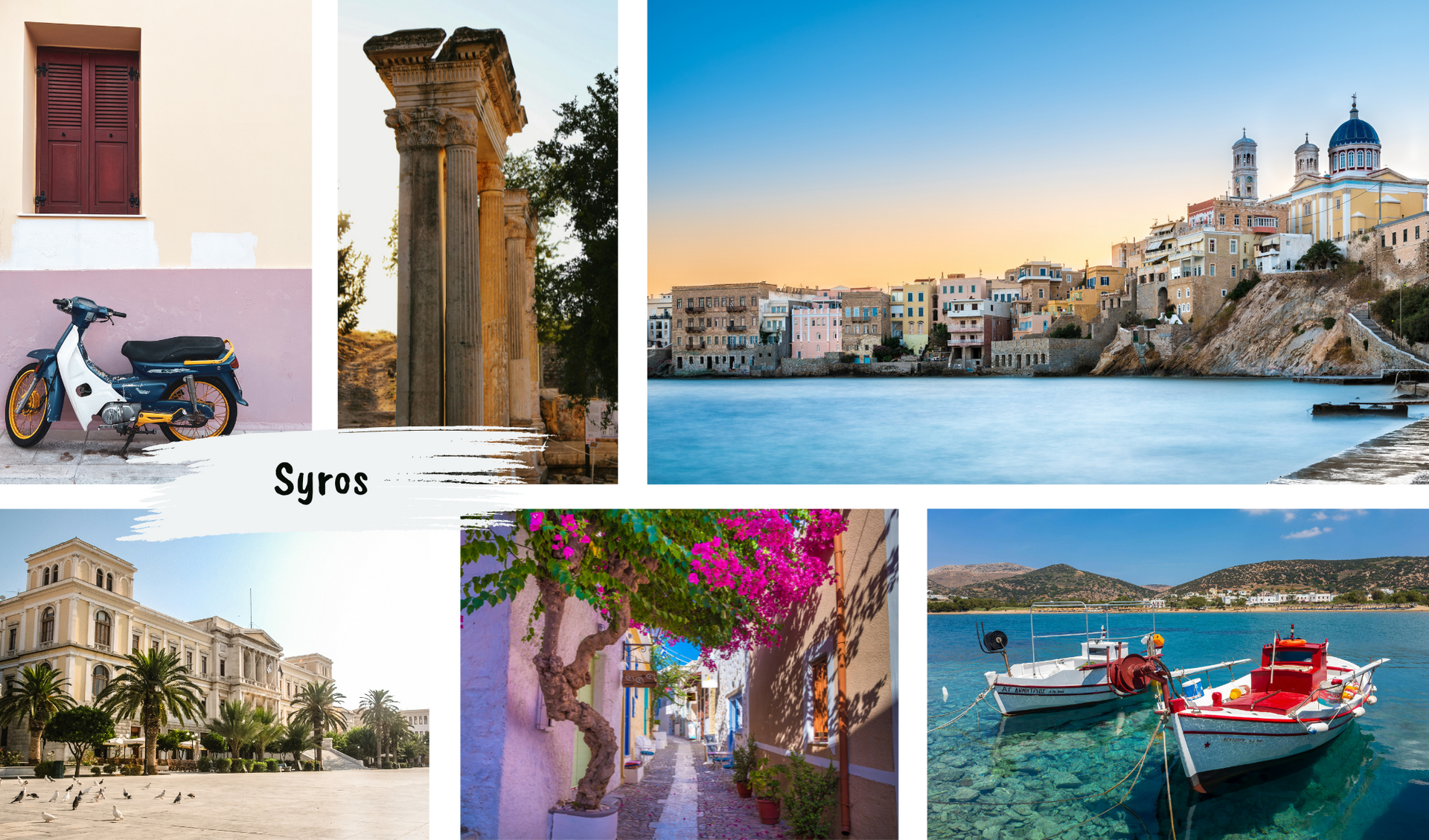
Syros - The cultural gem of the Cyclades
- A history shaped by trade and culture
Syros’s identity is deeply rooted in its central location within the Cyclades and its historic role in maritime trade. Since the Middle Ages, the island has been a strategic hub for trade between neighbouring islands, the Greek mainland and the rest of the Aegean Sea. Its capital, Ermoupoli, developed in the 19th century as a major economic and administrative centre, blending Greek, Venetian and Western influences. Its elegant neoclassical buildings and monumental staircases still bear witness to this flourishing period and make Ermoupoli a true architectural gem.
- A living cultural tradition
Syros is renowned for its rich and vibrant cultural life. Throughout the year, the island hosts festivals, concerts and artistic events that bring its squares and theatres to life. Traditional festivals, known as panigiria, also punctuate local life, combining music, dance and culinary specialities. They offer visitors an authentic immersion in Cycladic traditions, going far beyond mere tourist attractions.
- Architecture and adaptation to the terrain
Like the rest of the Cyclades, Syros features whitewashed houses and narrow alleyways. But the island stands out for its unique blend of Cycladic architecture and neoclassical style, which is particularly evident in Ermoupoli. Perched on the hillside, the district of Ano Syros exudes medieval charm with its winding alleyways and tightly packed houses. The whole area blends harmoniously with the landscape, offering superb panoramic views of the Aegean Sea.
- A culinary and artisanal tradition
Syros’s cuisine reflects its history as a maritime crossroads. Here you can enjoy fresh fish and seafood, local cheeses such as San Michali, as well as iconic specialities such as Syros loukoums and artisanal cured meats. The traditional tavernas and markets of Ermoupoli offer a chance to discover a rich, generous cuisine deeply rooted in local traditions.
- Cultural life and crafts
Syros boasts a vibrant cultural heritage, blending music, theatre and traditional crafts. The island is particularly renowned for its artistic scene, featuring workshops specialising in ceramics, embroidery and sculpture. The famous Apollo Theatre, inspired by the great Italian opera houses, perfectly illustrates this cultural richness and the island’s openness to European influences.
- An island where history meets modernity
Today, Syros charms visitors as much with its peaceful beaches and coves as with its exceptional urban heritage and vibrant cultural life. Every alleyway, every square, every building tells the story of an island that has managed to preserve its identity whilst moving with the times. Syros thus stands out as one of the most elegant and well-rounded islands in the Cyclades, harmoniously combining natural beauty, culture and refinement.
Best time to visit:
- May–June & September–October: ideal (mild climate, peaceful atmosphere, perfect for making the most of Syros without the summer crowds)
- July–August: very pleasant but busier, especially in Ermoupoli and on the popular beaches (though it remains quieter than some neighbouring islands such as Mykonos)
- April & October: the perfect time to explore the island, go hiking and discover the villages in an authentic atmosphere
The must-see places
- Ermoupoli : capitale élégante avec architecture néoclassique, grandes places animées et front de mer agréable
- Ano Syros: village perché au charme authentique avec ruelles étroites et vue imprenable
- Galissas & Kini : stations balnéaires paisibles idéales pour se détendre
- Vari & Finikas: zones plus calmes, parfaites pour une ambiance locale
And above all, don’t miss:
- Climbing up to Ano Syros to admire the panoramic view of the Aegean Sea
- Strolling around Miaouli Square in the heart of Ermoupoli
- Exploring the coastal villages to discover the island’s authentic side
The Beaches
Syros offers a wide variety of beaches:
- Galissas: fine sand and calm waters, ideal for swimming
- Kini: a peaceful atmosphere and magnificent sunsets
- Vari: perfect for families, with shallow waters
- Agathopes & Komito: wilder, unspoilt beaches
Cuisine & specialities
L’île est réputée pour : The island is famous for:
- Fresh fish and seafood
- Local cheeses such as San Michali
- Sweet specialities such as Syros loukoums
- Artisanal charcuterie and traditional Greek dishes
👉 Sampling these specialities in the tavernas of Ermoupoli or the coastal villages is an unmissable way to experience the local culture.
Getting around
- Hiring a car or a scooter is recommended if you want to explore the island at your own pace
- The bus network is convenient but has limited timetables
- Distances are short, but some roads are winding, particularly those leading to the hilltop villages
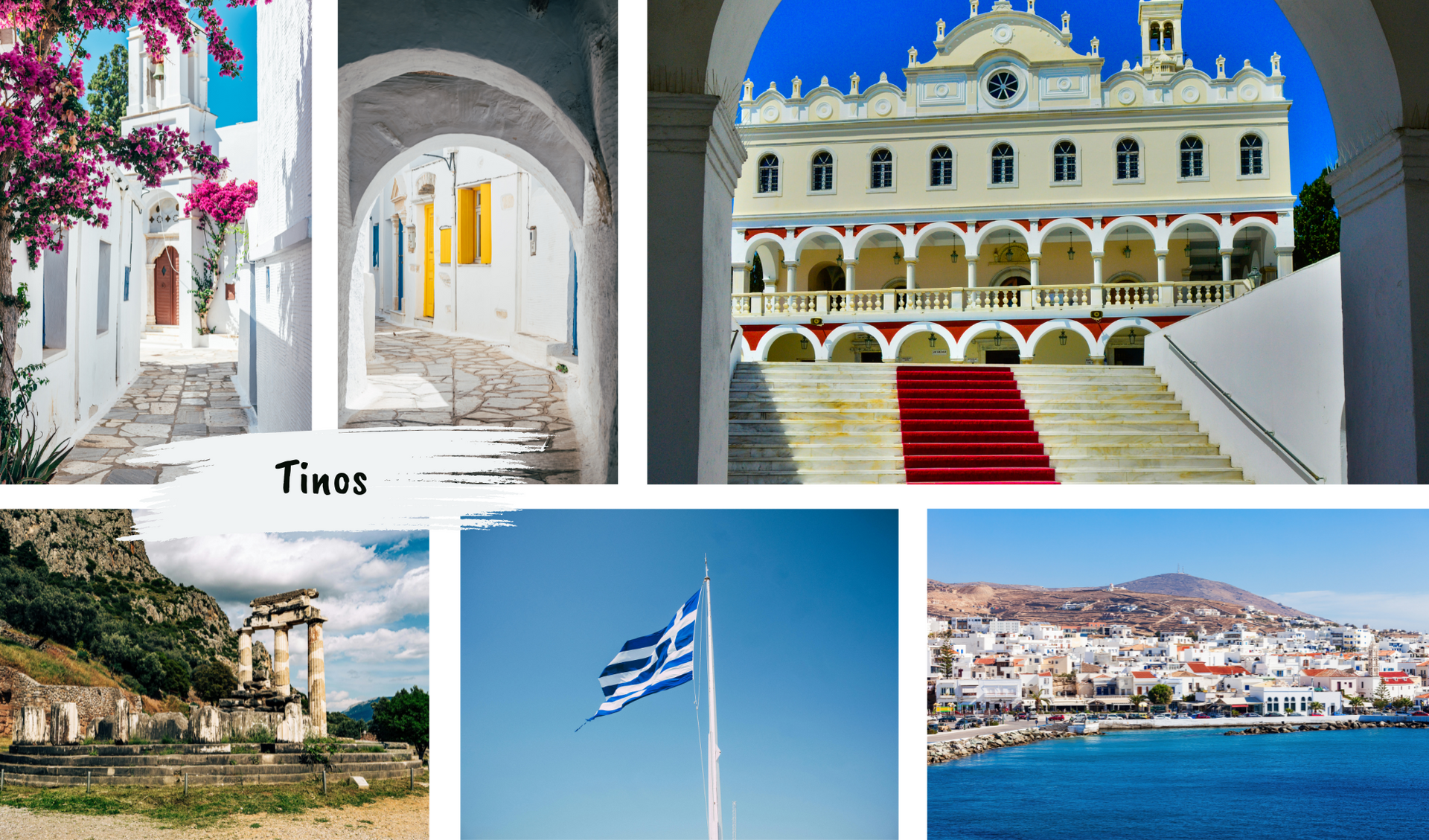
Milos - The volcanic island with its lunar landscapes in the Cyclades
- A history shaped by the sea and volcanic rock
Milos’s identity is deeply rooted in its volcanic origins and its strategic location at the heart of the Cyclades. Since ancient times, the island has played an important role thanks to its natural resources, particularly obsidian, a volcanic rock used for making tools and weapons. This trade made Milos a key trading hub in the Aegean Sea. Even today, the landscapes sculpted by volcanic activity tell this ancient story and give the island its unique character.
- A simple and authentic island tradition
Milos is characterised by a peaceful local way of life, far removed from the tourist hustle and bustle of some of its neighbouring islands. The fishing villages maintain a traditional way of life, centred on the sea and fishing. Local festivals, known as panigiria, punctuate the year and bring locals and visitors together to enjoy music, dancing and local cuisine. This friendly atmosphere offers a chance to discover an authentic and unspoilt Cycladic culture.
- Volcanic landscapes and picturesque villages
The island boasts an exceptional variety of landscapes, shaped by its geological history. Perched white villages such as Plaka overlook the Aegean Sea and offer spectacular views, particularly at sunset. Below, fishing villages such as Klima are characterised by their colourful waterside houses, known as syrmata. This contrast between the hills and the coastline gives Milos a unique visual identity.
- A landscape shaped by the volcano
Milos is famous for its extraordinary geological formations. The Sarakiniko site, with its white rocks sculpted by the wind and the sea, offers an almost lunar landscape. The coves and cliffs of Kleftiko, accessible mainly by boat, reveal sea caves and turquoise waters. These landscapes bear witness to the natural forces that have shaped the island over thousands of years.
- Seafood and local cuisine
Milos’s cuisine reflects its close connection to the sea and the volcanic soil. Here you can enjoy fresh fish, seafood and local specialities such as artisanal cheeses and Cycladic honey. The seaside tavernas serve simple yet delicious food, showcasing local produce and traditional recipes.
- An island where untamed nature meets the good life
Today, Milos captivates visitors with its perfect balance of spectacular landscapes, authentic villages and a peaceful atmosphere. Every beach, every cove and every village tells a different story, blending untamed nature with island culture. The island thus stands out as one of the most fascinating in the Cyclades, combining natural beauty, authenticity and serenity.
Best time to visit
- May–June & September–October: ideal (mild climate, peaceful atmosphere, perfect for making the most of Syros without the summer crowds)
- July–August: very pleasant but busier, especially around Plaka and the most famous beaches such as Sarakiniko (though it remains quieter than some neighbouring islands such as Mykonos)
- April & October: perfect for exploring the island, going for walks and discovering the villages in an authentic and peaceful atmosphere.
The must-see places
- Plaka: a traditional hilltop village with white-washed streets and spectacular sunsets
- Klima: colourful houses by the water’s edge, emblematic of the island
- Sarakiniko: a unique lunar landscape shaped by the volcano
- Kleftiko: sea cliffs and caves accessible by boat
And above all, don’t miss:
- Watching the sunset from Plaka
- Taking a boat trip around the Kleftiko Caves
- Exploring the traditional fishing villages
The beaches
Milos is famous for the exceptional variety of its beaches:
- Sarakiniko: white volcanic rocks and turquoise waters
- Firiplaka: a colourful beach surrounded by impressive cliffs
- Tsigrado: a wild cove accessible via a steep path
- Paleochori: volcanic sand and naturally warm waters
Cuisine & specialities
The island is famous for:
- Fresh fish and seafood
- Local cheeses and artisanal products
- Honey from the Cyclades
- Simple, tasty traditional Greek dishes
👉 Sampling these specialities in seaside taverns or fishing villages is an unmissable way to experience the local culture
Getting around
- Hiring a car or a scooter is highly recommended if you want to explore Milos at your own pace
- The roads provide easy access to the main villages and beaches
- Water taxis provide access to certain secluded coves
- Buses are available but are limited outside the peak season
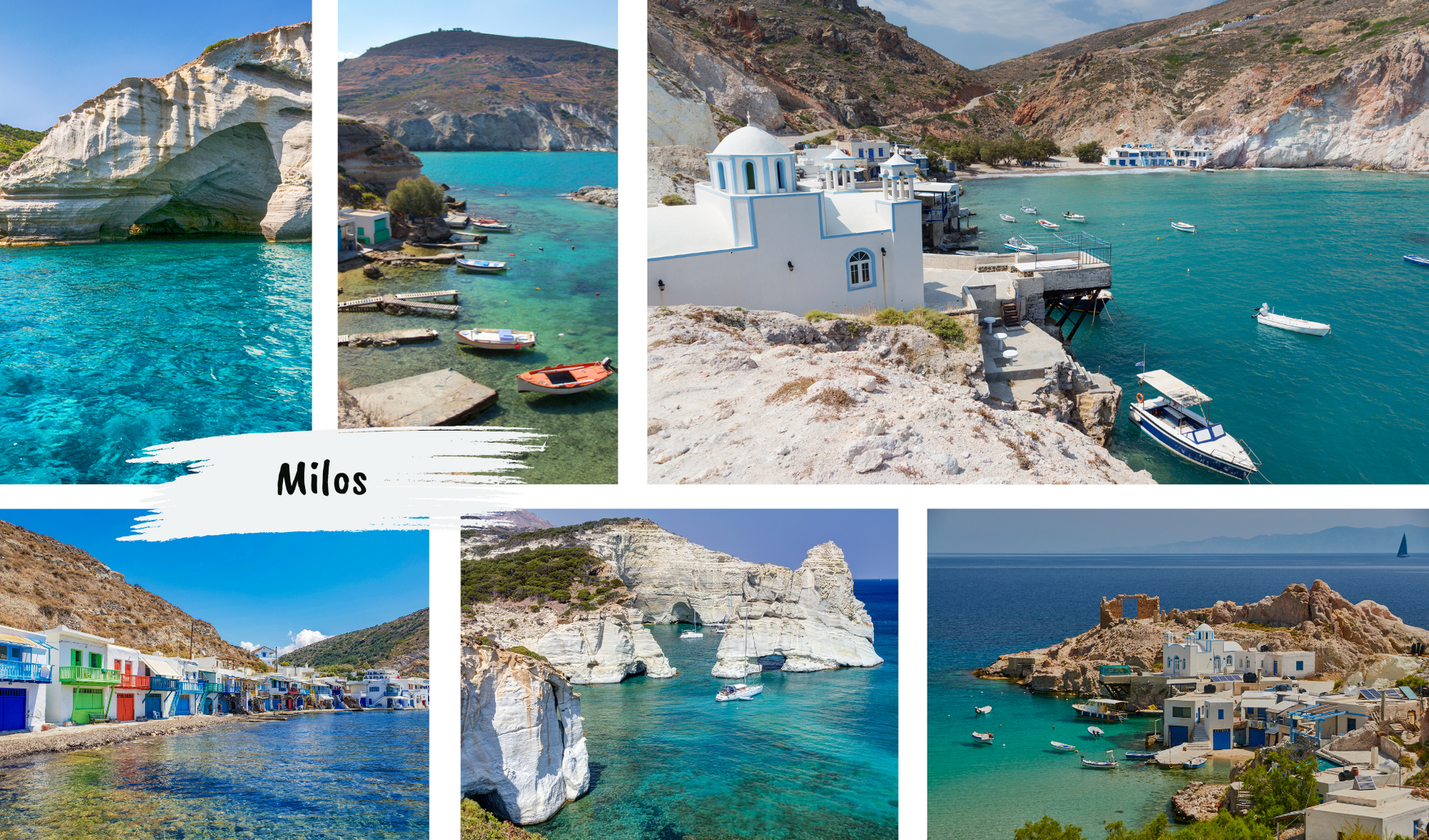
Amorgos - The unspoilt gem of the Cyclades
- A history shaped by the sea and monastic life
Amorgos’s identity is deeply rooted in its isolated position in the south-east of the Cyclades and its spectacular landscape, dominated by mountains and cliffs. Since ancient times, the island has always been a discreet yet strategic waypoint in the Aegean Sea, shaped by maritime life and religious traditions. The famous monastery of Panagia Hozoviotissa, built on the cliffside, still bears witness today to this spiritual dimension and to a history deeply rooted in the rock and the sea.
- An authentic and well-preserved island tradition
Amorgos stands out for its unspoilt, authentic atmosphere, far removed from mass tourism. Local life remains deeply rooted in tradition, with villages where time seems to have stood still. Traditional festivals, known as panigiria, punctuate the year and bring locals and visitors together to enjoy music, dancing and local cuisine. This warm, welcoming atmosphere offers visitors the chance to discover an unspoilt and deeply human Cycladic culture.
- Hilltop villages and spectacular scenery
The island is dominated by hilltop white villages such as Chora of Amorgos, with its narrow streets, windmills and medieval atmosphere. Each village offers breathtaking views of the Aegean Sea. The contrast between the rugged mountains and the deep blue sea gives Amorgos a strong and unique visual identity within the Cyclades.
- Unspoilt nature and crystal-clear waters
Amorgos is renowned for its rugged, unspoilt landscapes. Beaches such as Agia Anna boast exceptionally clear waters, often flanked by steep cliffs. The island is also criss-crossed by numerous hiking trails, offering visitors the chance to explore secluded coves, mountains and breathtaking views.
- Simple, traditional cuisine
The cuisine of Amorgos reflects the simplicity and authenticity of island life. It features local produce such as pulses, artisanal cheeses, fresh fish and wild herbs. Traditional tavernas serve rustic, flavourful Greek cuisine, often accompanied by local wines or raki.
- An island where spirituality meets untamed nature
Today, Amorgos captivates visitors with its unique blend of spirituality, unspoilt nature and authenticity. Every path, every village and every cliff tells a compelling story, set against a backdrop of seclusion and natural beauty. The island stands out as one of the wildest and most enchanting in the Cyclades, ideal for travellers seeking spectacular scenery and authentic experiences.
Best time to visit
- May–June & September–October: ideal (mild weather, peaceful atmosphere, perfect for making the most of Amorgos without the summer crowds)
- July–August: very pleasant but busier, especially around Chora on Amorgos and the most popular beaches such as Agia Anna (though it remains quieter than some neighbouring islands such as Mykonos)
- April & October: the perfect time to explore the island, go hiking and discover the villages in an authentic and peaceful atmosphere
Must see
- Chora of Amorgos: a hilltop village with white-washed streets, windmills and spectacular views
- Panagia Hozoviotissa: an iconic monastery built on the cliffside
- Agia Anna: a small, famous beach with crystal-clear waters
- Aegiali: a peaceful coastal village surrounded by mountains
Et surtout, à ne pas manquer :
- Admire the Hozoviotissa Monastery clinging to the cliff
- Hike between the villages and the mountains
- Relax in secluded coves with turquoise waters
The beaches
Amorgos is renowned for its wild, unspoilt beaches:
- Agia Anna: crystal-clear waters and spectacular rock formations
- Aegiali: a large bay ideal for swimming
- Mouros: a secluded cove accessible via a steep path
- Paleochori: volcanic sand and naturally warm waters
Cuisine & specialities
The island is famous for:
- Fresh fish and seafood
- Local cheeses and artisanal products
- Lentils and simple traditional dishes
- Raki and local specialities
👉 Sampling these specialities in the village tavernas is an unmissable way to experience the authentic culture of Amorgos.
Getting around
- Hiring a car or a scooter is recommended if you want to explore Amorgos at your own pace
- The roads are winding but offer magnificent views
- Buses are available but run on a limited timetable
- Distances are short, but the terrain is mountainous
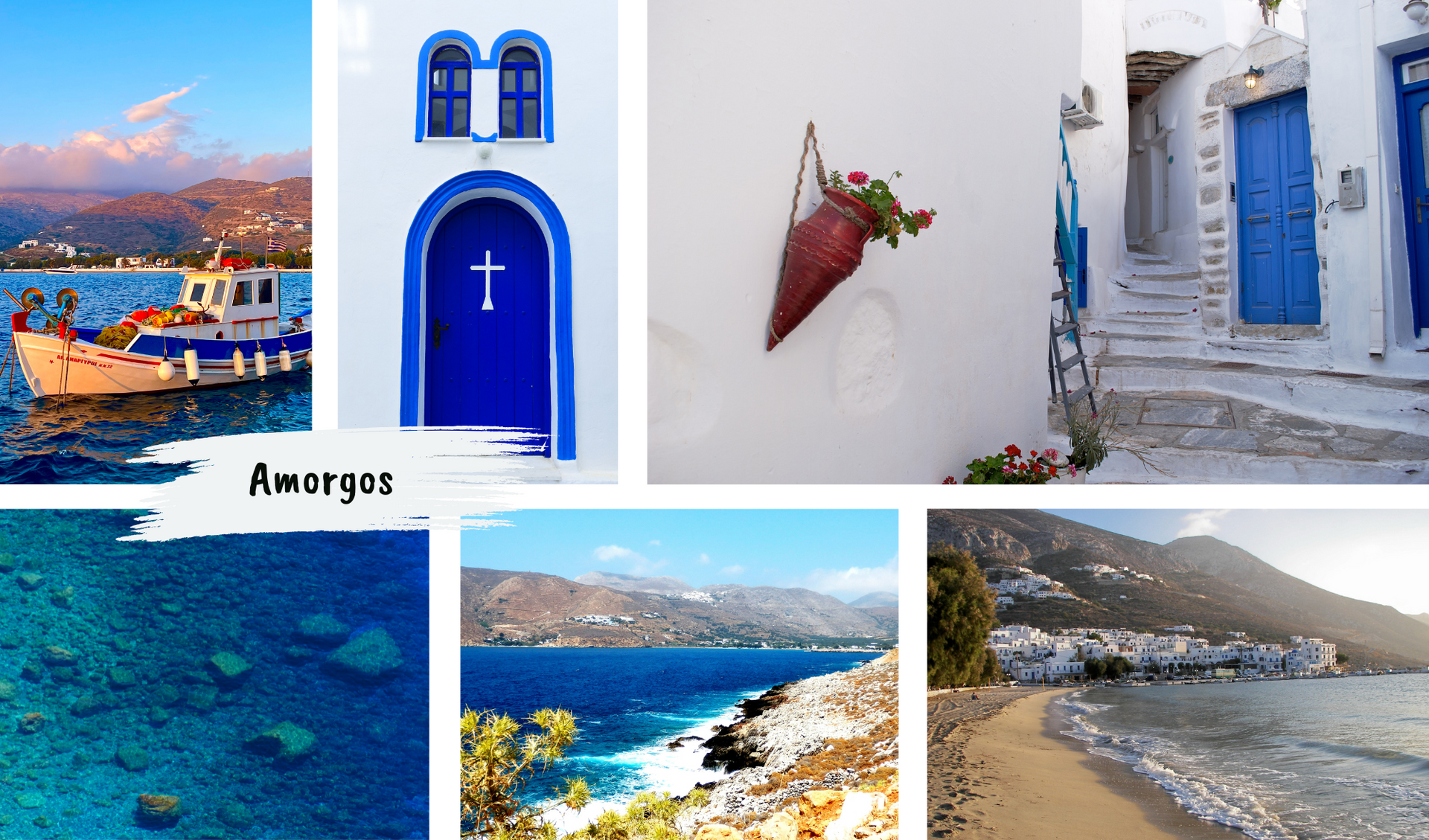
Folegandros - The secret island with the timeless charm of the Cyclades
- A history shaped by the sea and the island’s quiet way of life
Folegandros’s identity is deeply rooted in its isolation at the heart of the Cyclades and its spectacular landscape, dominated by sheer cliffs plunging into the Aegean Sea. Since ancient times, the island has always remained off the main trade routes, thus preserving an unspoilt and authentic atmosphere. Characterised by rural and maritime life, Folegandros has managed to retain a simple identity, marked by tradition and spirituality.
- An authentic and well-preserved island tradition
Folegandros stands out for its peaceful and deeply authentic atmosphere, far removed from mass tourism. Local life still follows the rhythm of the seasons and traditions. Traditional festivals, known as panigiria, bring locals and visitors together to enjoy music, dancing and local cuisine in a warm and friendly atmosphere. The island embodies a simplicity that is rare in the Cyclades.
- Hilltop villages and spectacular scenery
The heart of the island is dominated by Chora de Folegandros, a spectacular hilltop village built on the edge of a cliff. With its white-washed narrow streets, small squares and peaceful atmosphere, it offers breathtaking views of the Aegean Sea. The contrast between the sheer cliffs and the deep blue horizon gives Folegandros a strong and unique visual identity.
- Unspoilt countryside and unspoilt coves
Folegandros is renowned for its rugged landscapes and unspoilt natural beauty. Agali Beach charms visitors with its crystal-clear waters and peaceful natural setting. Other coves, accessible on foot or by boat, reveal a wild island, perfect for those seeking tranquillity. The hiking trails offer the chance to explore cliffs, secluded chapels and spectacular views.
- Simple, traditional cuisine
The cuisine of Folegandros reflects the simplicity of island life. It features local produce such as artisanal cheeses, pulses, fresh fish and traditional Greek specialities. The village tavernas serve authentic, hearty fare, often accompanied by local wine or raki.
- An island where silence, nature and authenticity come together
Today, Folegandros captivates visitors with its rare balance of unspoilt nature, tranquillity and authenticity. Every path, every cliff and every village tells a story of simplicity and raw beauty. The island stands out as one of the most unassuming and enchanting in the Cyclades, perfect for those seeking an unspoilt, timeless Greece.
Best time to visit
- May–June & September–October: ideal (mild climate, peaceful atmosphere, perfect for making the most of Folegandros without the summer crowds)
- July–August: very pleasant but busier, especially around Chora in Folegandros and the most popular beaches such as Agali (though it remains quieter than some neighbouring islands such as Mykonos)
- April & October: the perfect time to explore the island, go hiking and discover the villages in an authentic and peaceful atmosphere
The must-see places
- Chora of Folegandros: a spectacular hilltop village perched on the cliffs, with whitewashed streets and incredible views
- Panagia Church, Folegandros: a small, iconic church overlooking the Aegean Sea
- Agali: a peaceful beach with crystal-clear waters, surrounded by nature
- Karavostasis: a quiet little harbour and the island’s main port
And above all, don’t miss:
- Hike up to Chora at sunset
- Walk along the paths linking the beaches
- Explore the secluded coves accessible on foot or by boat
The beaches
Folegandros is renowned for its unspoilt natural coves:
- Agali: the main beach with crystal-clear waters
- Agios Nikolaos: a small, quiet beach accessible by boat or on foot
- Katergo: a secluded cove with turquoise waters
- Fira: a more secluded and very natural spot
Cuisine & specialities
The island is famous for:
- Fresh fish and seafood
- Local cheeses and simple produce
- Rustic traditional Greek dishes
- Wild herbs and local recipes
👉 Sampling these specialities in the tavernas of Chora or the harbour is an unmissable way to experience the authentic culture of Folegandros.
Getting around
- Hiring a car or a scooter is recommended if you want to explore Folegandros at your own pace
- The roads are short but can be winding and steep
- Buses run between the main villages and beaches during the tourist season
- Hiking remains one of the best ways to discover the island
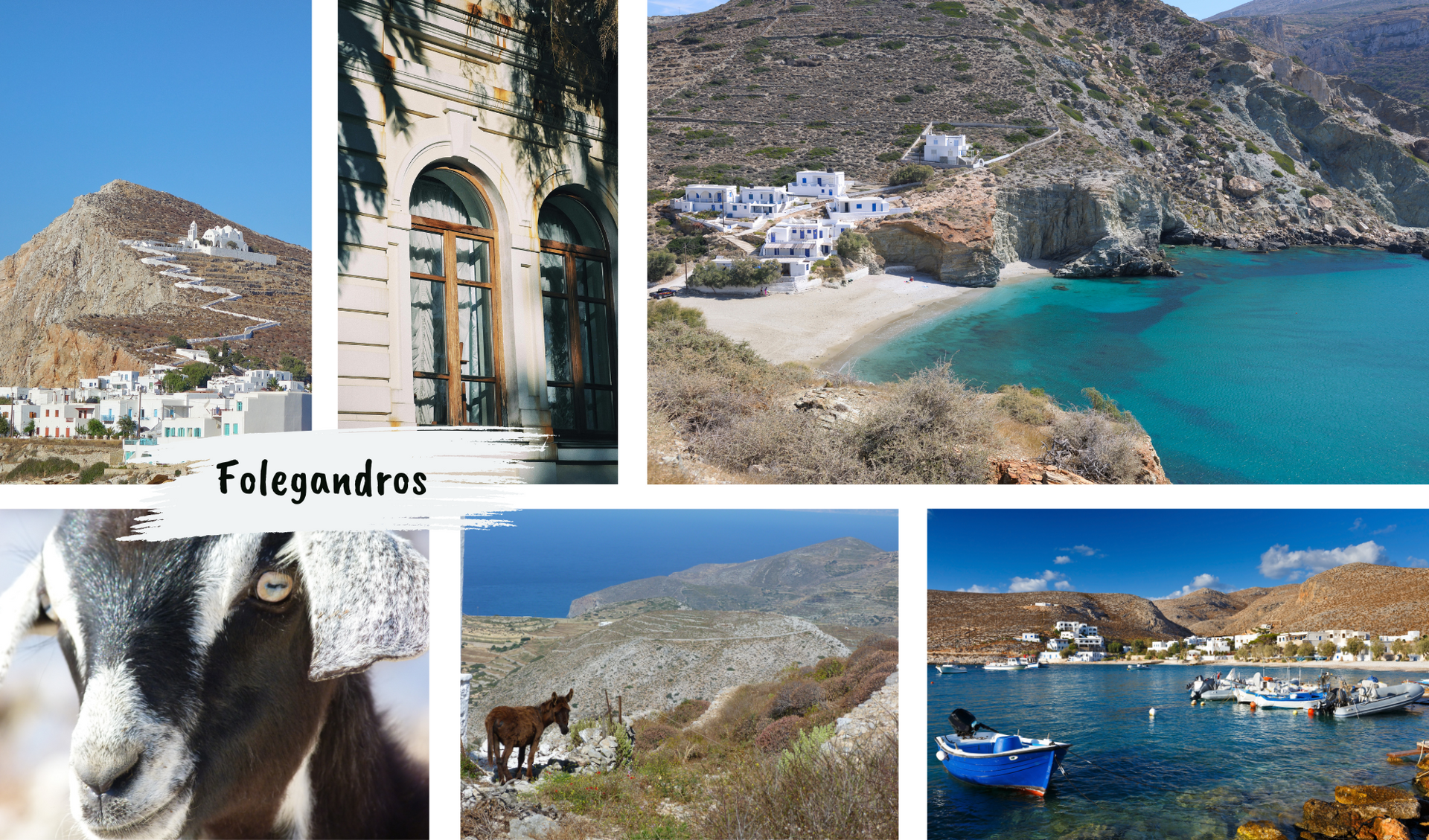
Tinos - Between faith, art and Cycladic authenticity
- A history shaped by faith and stonework
The identity of Tinos is deeply rooted in its spiritual dimension and its heritage of craftsmanship at the heart of the Cyclades. Since ancient times, the island has been an important place of pilgrimage, particularly around the church of Panagia Evangelistria, which attracts thousands of visitors every year. At the same time, Tinos is also renowned for its unique expertise in marble sculpture, which has shaped its identity and its villages.
- An authentic and vibrant island tradition
Tinos is characterised by a deeply authentic atmosphere, where religious traditions and everyday life coexist harmoniously. Local festivals, known as panigiria, punctuate the year and bring the island’s inhabitants together to enjoy music, dancing and local cuisine. The island has managed to preserve a strong cultural identity, far removed from the tourist hustle and bustle of some of its neighbouring islands.
- Marble villages and picturesque landscapes
The island is famous for its traditional villages built of stone and marble, such as Pyrgos, which is regarded as the historic centre of marble sculpture. The narrow streets, carved fountains and peaceful squares give Tinos a unique artistic character. Each village blends seamlessly into the rolling landscape, offering gentle, harmonious views of the Aegean Sea.
- A gentle, unspoilt natural environment
Unlike some of the more rugged islands in the Cyclades, Tinos offers a gentler landscape, characterised by rolling hills, terraced farmland and scattered villages. Beaches such as Kolymbithra attract nature lovers and water sports enthusiasts, whilst other, more secluded coves offer the chance to enjoy calm, crystal-clear waters.
- A generous local cuisine
The cuisine of Tinos reflects the richness of its local produce. It features artisanal cheeses, locally grown vegetables, wild herbs and traditional Greek dishes. The island is also known for its pies (pites), made according to family recipes passed down through the generations.
- An island where spirituality, art and authenticity come together
Today, Tinos captivates visitors with its unique blend of spirituality, craftsmanship and unspoilt nature. Every village, every chapel and every marble workshop tells a story deeply rooted in tradition. The island stands out as one of the most authentic and culturally rich in the Cyclades, ideal for those seeking a genuine, artistic and timeless Greece.
Best time to visit
- May–June & September–October: ideal (mild weather, peaceful atmosphere, perfect for making the most of Tinos without the summer crowds)
- July–August: very pleasant but busier, especially around Panagia Evangelistria and the best-known villages such as Pyrgos (though it remains quieter than some neighbouring islands such as Mykonos)
- April & October: the perfect time to explore the island, go hiking and discover the villages in an authentic and peaceful atmosphere
The must-see places
- Panagia Evangelistria: a major pilgrimage site overlooking the town of Tinos
- Pyrgos: a marble village and the island’s centre for art and crafts
- Volax: a unique village surrounded by impressive rock formations
- Kolymbithra: a beach renowned for its waves and natural setting
And above all, don’t miss:
- Visiting the Panagia Evangelistria sanctuary
- Exploring the marble villages in the island’s interior
- Discovering the granite landscapes around Volax
The beaches
Tinos offers a variety of unspoilt beaches:
- Kolymbithra: a surf spot and a large natural bay
- Agios Fokas: a long beach near the main town
- Livada: a secluded beach surrounded by rocks
- Agios Sostis: a quiet, unspoilt beach
Cuisine & specialities
The island is famous for:
- Local cheeses and farm produce
- Traditional pies (pites)
- Wild vegetables and herbs
- Simple, authentic Greek cuisine
👉 Sampling these specialities in the village tavernas is an unmissable way to experience the local culture of Tinos.
Getting around
- Hiring a car or a scooter is recommended if you want to explore Tinos at your own pace
- The roads vary but are generally easy to navigate
- Buses run between the main villages and beaches during the season
- Distances are short, but the terrain can be hilly
Information and bookings at our agencies Vos Voyages by Culture Air Travel
Geneva : +41 22 839 81 81
Lausanne : +41 21 331 15 15
Yverdon-les-Bains : +41 24 425 77 11
Please continue to entrust us with your travel plans; we will guide you through every step of the process
and do our utmost to ensure your complete satisfaction.
The whole team at Vos Voyages by Culture Air Travel would like to thank you for your valuable support and your loyalty.